Concrete driveways are built to last, but no material is completely maintenance-free. Over time, homeowners in Greenville, SC may start to notice cracks, stains, surface wear, or drainage issues. These problems often begin small and develop gradually.
Understanding what causes these issues and how to address them early helps protect your driveway and avoid larger repairs. This guide covers the most common concrete driveway problems in Greenville, what they mean, and how they are typically fixed.
If you are planning a new driveway or want to understand how proper installation prevents many of these issues, refer to Everything You Need to Know About Concrete Driveway Installation in Greenville, SC.
Why Concrete Driveway Problems Occur
Concrete is strong, but it is still affected by environmental conditions, usage, and how it was installed. Most driveway problems fall into one of three categories:
Structural issues caused by base movement or improper installation
Surface-level damage caused by weather or wear
Maintenance-related issues due to lack of sealing or cleaning
In Greenville, factors like rainfall, soil movement, and temperature changes all play a role in how concrete performs over time.
1. Cracking in Concrete Driveways
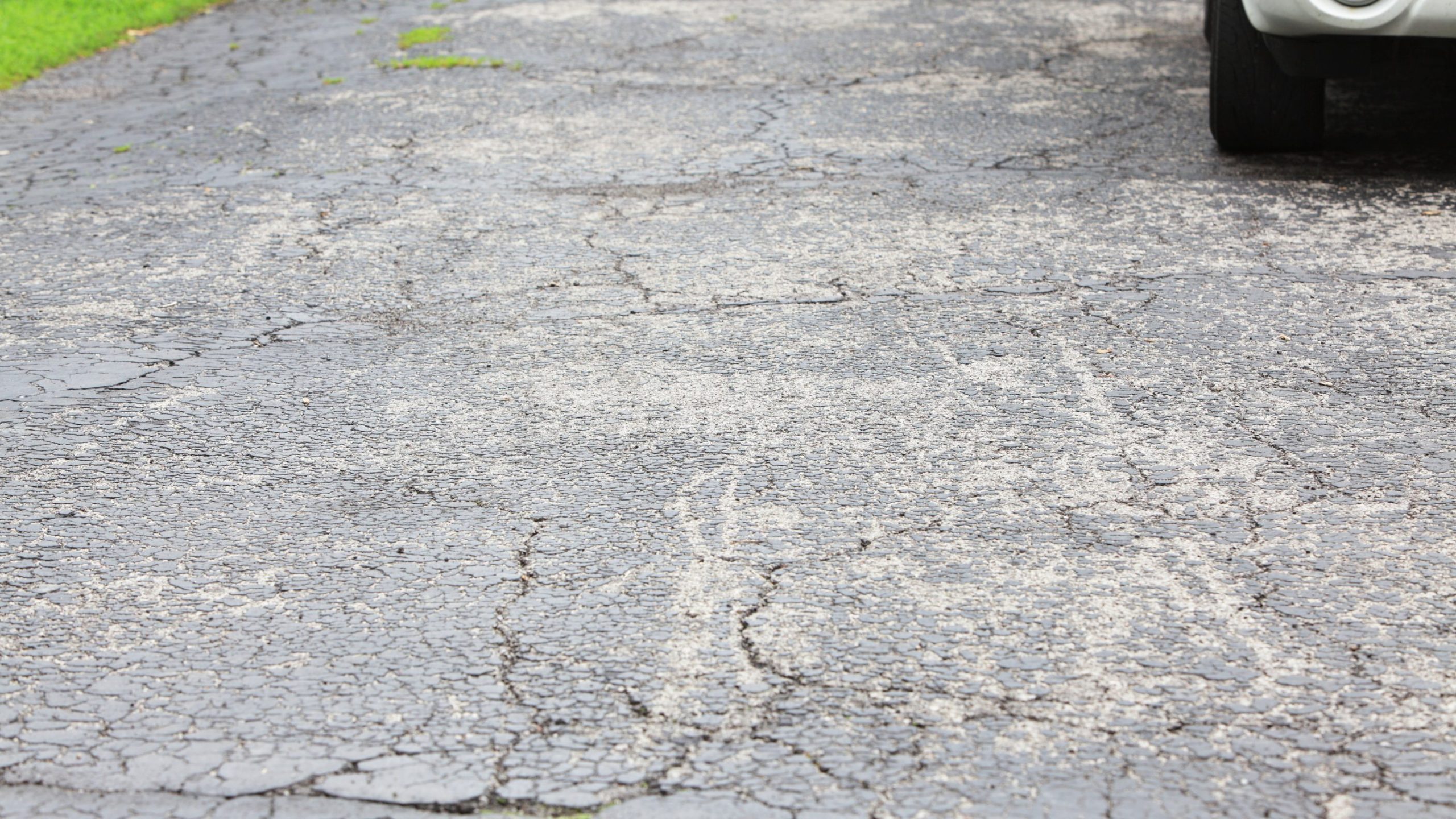
Cracking is the most common concern homeowners notice. Not all cracks indicate a serious problem, but understanding the type of crack is important.
Types of Cracks
Hairline Cracks
These are small, thin cracks that often appear as the concrete cures. They are usually cosmetic and do not affect structural integrity.
Shrinkage Cracks
These occur when concrete loses moisture too quickly during curing. They are typically shallow and controlled by proper installation techniques.
Settlement Cracks
These cracks develop when the ground beneath the driveway shifts. They can become larger over time and may indicate a base issue.
Structural Cracks
Wider cracks that spread or change over time may signal deeper structural problems.
How to Fix Cracks
- Small cracks can be sealed with flexible concrete fillers
- Medium cracks may require routing and sealing
- Larger cracks or shifting slabs may need partial replacement
Preventing water from entering cracks is key to stopping further damage.
For more guidance on protecting your driveway from cracks, see our Concrete Driveway Maintenance Guide for Greenville, SC Homeowners.
2. Surface Scaling and Flaking
Scaling occurs when the top layer of concrete begins to peel or flake off. This problem is often noticeable as rough patches or chipped areas.
Common Causes
- Moisture exposure during curing
- Freeze-thaw cycles
- Use of de-icing chemicals
- Weak surface finishing
How to Fix Scaling
- Minor scaling can be repaired with resurfacing products
- More severe scaling may require grinding and refinishing
- Extensive damage may require slab replacement
Preventative sealing helps protect the surface from moisture-related damage.
3. Discoloration and Staining
Concrete naturally changes color slightly over time, but uneven discoloration or staining can affect appearance.
Common Types of Stains
- Oil stains from vehicles
- Rust stains from metal objects
- Organic stains from leaves and mulch
- Tire marks and surface buildup
How to Fix Stains
- Pressure washing removes surface dirt and debris
- Degreasers help remove oil stains
- Specialty cleaners treat rust or organic stains
Sealing the surface helps reduce future staining and makes cleaning easier.
4. Uneven or Sunken Concrete
A driveway should remain level over time. When sections begin to sink or tilt, it usually indicates a problem beneath the slab.
Causes of Uneven Concrete
- Poor base preparation
- Soil erosion or compaction issues
- Water infiltration beneath the slab
How to Fix Uneven Areas
- Concrete leveling (lifting) can restore slab position
- Void filling stabilizes the base
- Severe cases may require section replacement
Uneven concrete is more than a cosmetic issue. It can create drainage problems and safety concerns if not addressed.
5. Surface Wear and Rough Texture
Over time, driveways may lose their smooth finish. High-traffic areas often show wear first.
Causes of Surface Wear
- Frequent vehicle traffic
- Exposure to weather
- Use of abrasive cleaning methods
Repair Options
- Surface resurfacing can restore appearance
- Grinding smooths uneven areas
- Sealing protects against further wear
Surface wear is common in older driveways and usually develops gradually.
6. Drainage Problems
Drainage is one of the most important factors in driveway performance. Poor drainage can lead to multiple issues, including cracking, erosion, and standing water.
Signs of Drainage Issues
- Water pooling on the driveway
- Soil erosion near edges
- Increased cracking in certain areas
How to Fix Drainage Problems
- Adjusting slope to direct water away
- Installing drainage channels
- Repairing low spots
Proper drainage design is part of installation, which is why it is emphasized in our concrete driveway installation.
7. Expansion Joint Deterioration
Expansion joints allow concrete to expand and contract. Over time, the material inside these joints can deteriorate.
Signs of Joint Damage
- Missing or cracked joint filler
- Debris buildup in joints
- Water collecting along joint lines
Repair Solutions
- Cleaning out joints
- Replacing joint filler material
- Sealing joints to prevent water entry
Maintaining joints helps control cracking and protects the slab from moisture.
8. Edge Cracking and Breakdown
The edges of a driveway are often more vulnerable to damage than the center.
Causes of Edge Damage
- Lack of support along edges
- Vehicles driving too close to edges
- Soil erosion near the driveway
Repair Options
- Edge reinforcement
- Partial repair or replacement
- Improving drainage along edges
Keeping vehicles centered on the driveway reduces stress on unsupported edges.
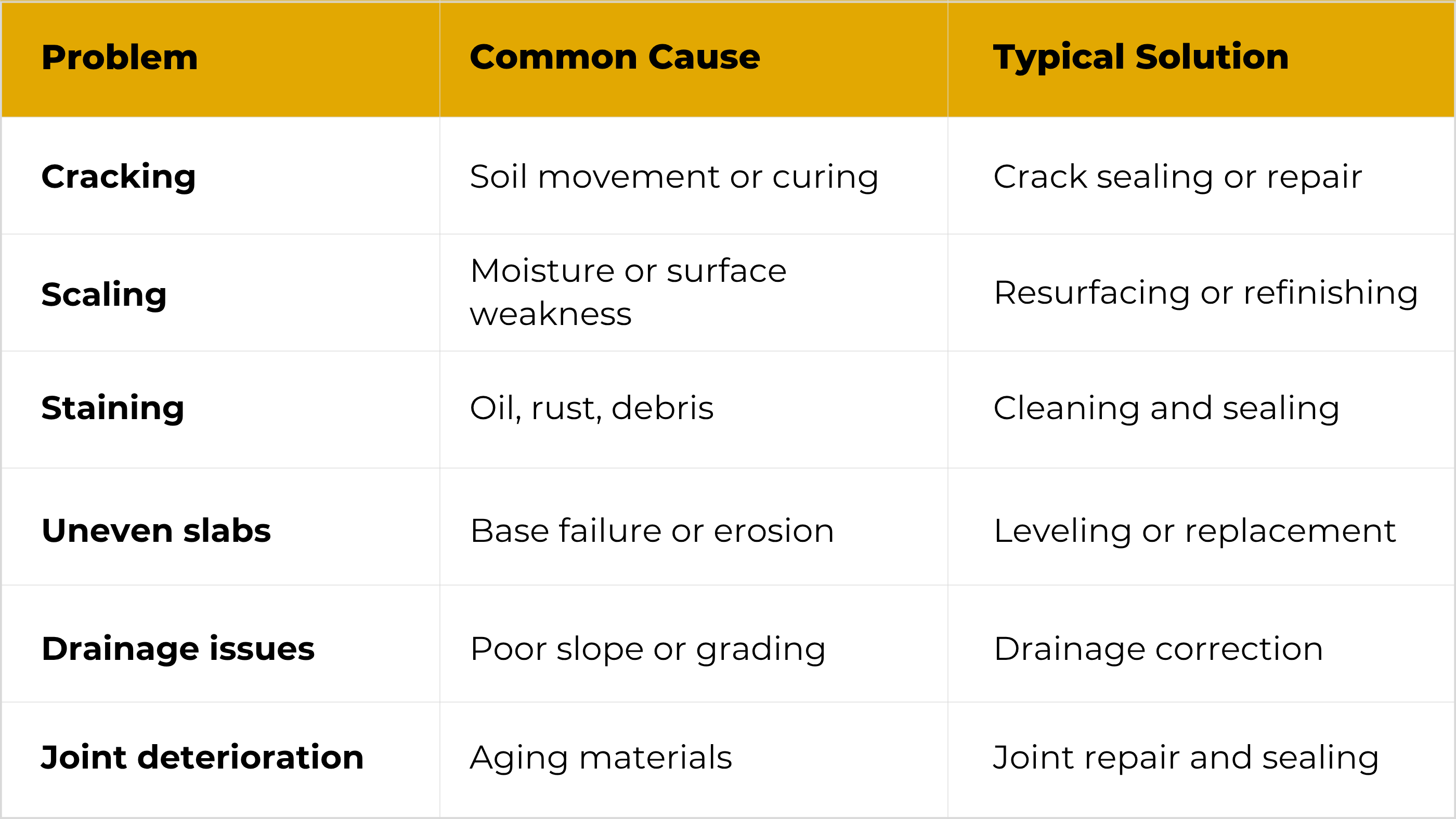
Comparing Common Problems and Solutions
The table below summarizes common issues and typical repair approaches.
Preventing Concrete Driveway Problems
Many driveway issues can be reduced or avoided with proper care and planning.
Key Prevention Steps
- Ensure proper installation from the start
- Maintain drainage and slope
- Seal the driveway regularly
- Clean debris and stains promptly
- Address small cracks early
Preventative care is simpler and more cost-effective than large repairs.
When to Repair vs Replace a Driveway
Not all problems require full replacement. The decision depends on the severity and extent of the damage.
Repair May Be Enough When:
- Cracks are small and localized
- Surface wear is moderate
- The base remains stable
Replacement May Be Needed When:
- Large sections are shifting or sinking
- Cracks are widespread and deep
- Drainage problems cannot be corrected
Understanding the difference helps homeowners make practical decisions about their driveway.
Cost Considerations for Repairs
Repair costs vary based on the type of issue and its severity.
Small repairs such as crack sealing are relatively low-cost. Larger repairs like resurfacing or leveling involve more labor and materials.
Full replacement is the highest cost option but may be necessary for structural issues.
For homeowners evaluating total investment, our How Much Does a Concrete Driveway Cost in Greenville, SC guide provides detailed cost breakdowns.
Working with a Professional Contractor
Concrete driveway issues are often easier to evaluate with professional experience.
A contractor can assess:
- Whether the issue is surface-level or structural
- The condition of the base beneath the slab
- The most effective repair method
Sampson Concrete Company works with homeowners throughout Greenville and surrounding areas to evaluate driveway conditions and recommend practical solutions based on real site conditions.
Final Thoughts
Concrete driveways are designed for durability, but common issues can still develop over time. Cracks, surface wear, drainage problems, and joint deterioration are all manageable when addressed early.
Understanding the cause of each issue helps homeowners choose the right repair approach and avoid unnecessary replacement.
Proper installation, routine maintenance, and early repairs all contribute to long-term performance. With the right approach, a concrete driveway can remain functional and visually consistent for decades.