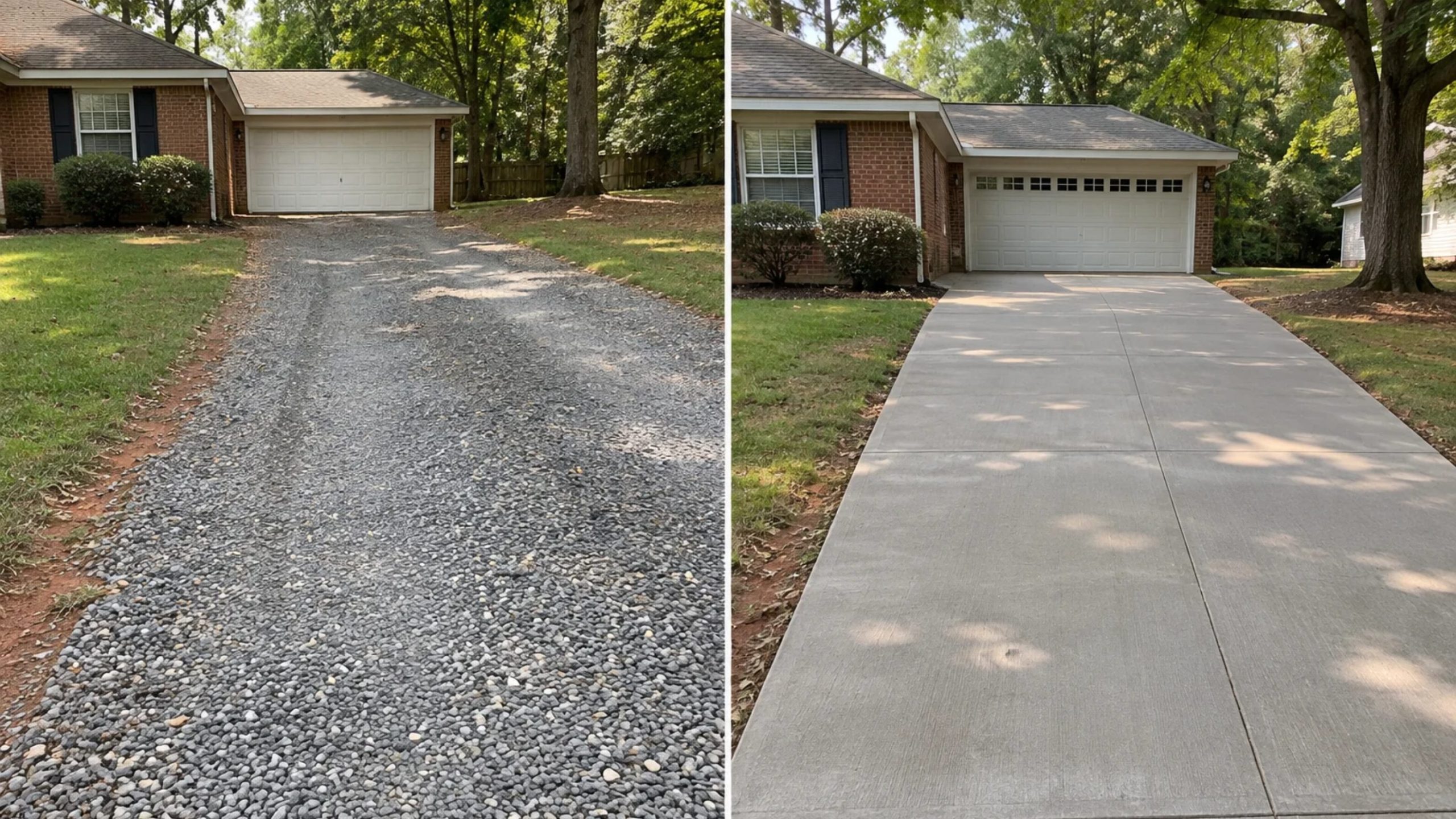
Choosing between a gravel vs. concrete driveway in Greenville, SC comes down to your budget, your property, and how long you want the surface to last. Gravel costs far less upfront and drains well, which suits long rural driveways and tight budgets. Concrete costs more to install but lasts decades with little upkeep and adds more value to your home. For most suburban Upstate properties, concrete is the stronger long-term choice, while gravel earns its place on larger lots and lower budgets.
Neither option is simply better than the other. The right answer depends on your specific lot, how you use the driveway, and what you want to spend over time rather than just on day one. This guide compares the two on cost, lifespan, maintenance, and how each performs on our local soil, so you can match the surface to your property.
The Quick Comparison
Before the details, here is how the two materials stack up on the factors that matter most to Upstate homeowners. The figures are general 2026 ranges, since your final cost depends on size, site prep, and access.
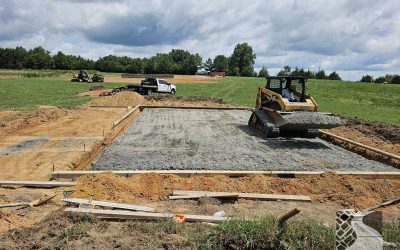
| Stage | What it does | How it is checked |
|---|---|---|
| Rough grading | Shapes the overall lot so water moves away from structures | Slope and elevation set against the site plan |
| Fine grading | Sets the exact height and slope of the subgrade under the slab | Laser level readings across the pour area |
| Final check | Confirms drainage and depth before the base goes in | Walkthrough with the forms layout |
Cost and Long-Term Value
Gravel wins on upfront price by a wide margin. A gravel driveway typically runs a few dollars per square foot installed, while concrete costs several times that once you factor in forming, pouring, and finishing. If your only concern is the initial bill, gravel is the clear winner.
The picture changes when you look at the full lifespan. Gravel needs fresh stone added and ruts leveled on a regular basis, and those costs add up year after year. Concrete asks far less of you over its life, and it tends to return more at resale because buyers see a finished, permanent surface. Over twenty or thirty years, the gap between the two narrows considerably once upkeep is counted.
Lifespan and Durability
A well-built concrete driveway lasts twenty to thirty years or more. It handles heavy vehicles, resists daily wear, and keeps a clean, solid surface the whole time. Our mild Upstate winters work in concrete’s favor here, since the hard freeze-thaw cycles that crack slabs up north are rare in Greenville.
Gravel has no single lifespan because it is a surface you continually renew. The stone shifts, scatters, and sinks into the ground over time, so a gravel driveway lasts as long as you keep refreshing it. It will never crack, which is a real advantage, but it also never stops asking for attention.
Maintenance Reality
This is where the two diverge the most. Concrete is close to hands-off. You clean it, seal it every few years, and fill the occasional crack before water gets in. That is the extent of it for most homeowners.
Gravel is an ongoing commitment. Stones migrate toward the edges and into the yard, low spots turn into puddles and ruts, and weeds push through without a barrier. Keeping a gravel driveway looking sharp means regrading and adding material more than once over the years. Some homeowners enjoy the rustic look enough to accept that work, and others quickly tire of it.
How Greenville's Soil and Terrain Factor In
Local ground conditions shape this decision more than most homeowners expect. The Upstate sits on dense red clay that holds water and drains slowly, and that clay behaves differently under each surface.
Gravel’s permeability is a genuine strength on our soil. Water drains straight through it rather than pooling, which helps on flat lots and in spots where runoff collects. On a long driveway through a rural property, gravel handles rain without the need for extensive drainage work.
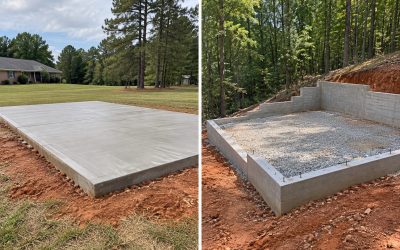
Concrete demands proper site preparation to perform on clay. The slab has to sit on a compacted, well-graded base that directs water away, or the clay’s seasonal movement can lead to cracking. Done right, a concrete driveway stays stable for decades, which is why the groundwork matters as much as the pour. Our overview of concrete site prep and grading in Greenville explains what that preparation involves.
Which Driveway Is Right for Your Property?
The right choice usually becomes clear once you weigh cost against how you use the driveway. These guidelines point you in the right direction.
- Choose gravel if you have a long or rural driveway, a tight budget, or a lot where drainage is a persistent problem and you do not mind regular upkeep.
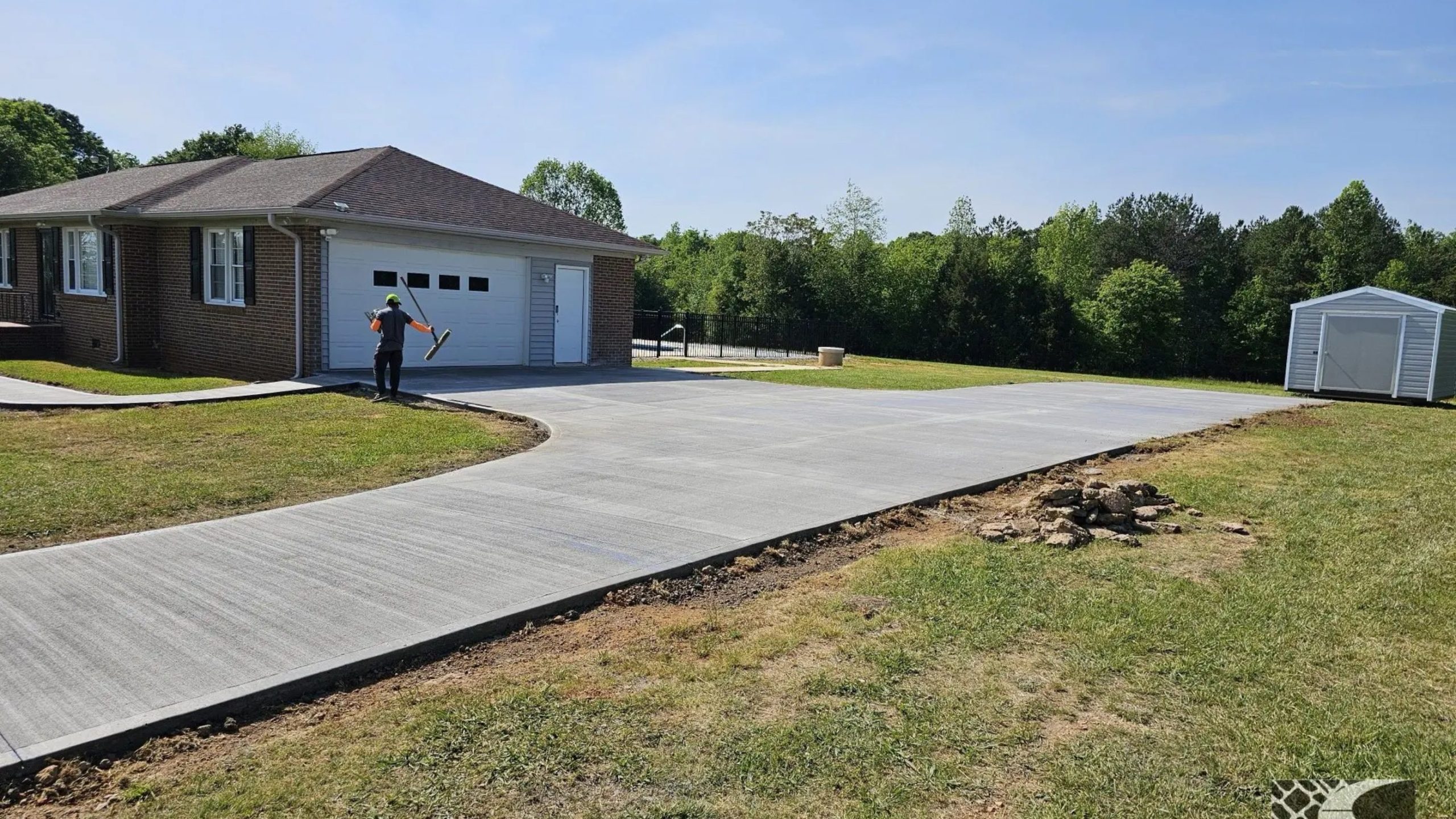
- Choose concrete if you want a low-maintenance, permanent surface, you are focused on resale value, or you have a standard suburban driveway that sees daily use.
Consider your timeline. If you plan to stay in the home for years, concrete’s durability usually justifies the higher upfront cost.
Many Upstate homeowners also start with gravel as an affordable first step, then upgrade to concrete later when the budget allows. If you are weighing a decorative concrete upgrade, our look at whether a stamped concrete driveway is worth it in Greenville breaks down that option. For broader guidance on concrete pavement, the Portland Cement Association is a useful outside reference.
Frequently Asked Questions
Is a gravel driveway cheaper than concrete in the long run?
Not always. Gravel is much cheaper to install, but it needs stone added and regrading on a regular basis. Over twenty or thirty years, that ongoing maintenance narrows the gap, and concrete often comes out competitive once resale value is included.
Does a gravel driveway work on red clay soil?
Yes, and its drainage is an advantage on clay. Water passes through gravel rather than pooling on the slow-draining soil. The base still needs proper grading and compaction so the stone does not sink into the clay over time.
Will a concrete driveway crack in the Upstate?
It can if the base is poorly prepared, but our mild winters make freeze-thaw cracking far less common than in colder regions. Proper site prep, drainage, and reinforcement are what keep a slab stable on local clay.
Can I convert a gravel driveway to concrete later?
Yes. Many homeowners start with gravel and upgrade to concrete when the budget allows. The existing graded base can often be reused, though a contractor should assess it before the pour.
Ready to Choose Your Driveway?
The best driveway is the one that fits your property, your budget, and how long you plan to stay. Gravel offers low cost and great drainage for rural and long driveways, while concrete delivers a durable, low-maintenance surface that adds lasting value to most suburban homes. Sampson Concrete installs both gravel driveways and concrete driveways across Greenville, Easley, Greer, and Simpsonville, and we can walk your property to recommend the right fit. Contact us for a free estimate and we will help you decide with confidence.