You poured a beautiful new driveway or patio in Greenville, South Carolina, and within a year or two you spotted a crack. It is one of the most frustrating things a homeowner can see, and one of the most common questions we hear across the Upstate. The hard part is knowing what it means. Some concrete cracking is completely normal and harmless, while other cracking warns that something under the slab has gone wrong. Telling those two apart is what saves you money and stress.
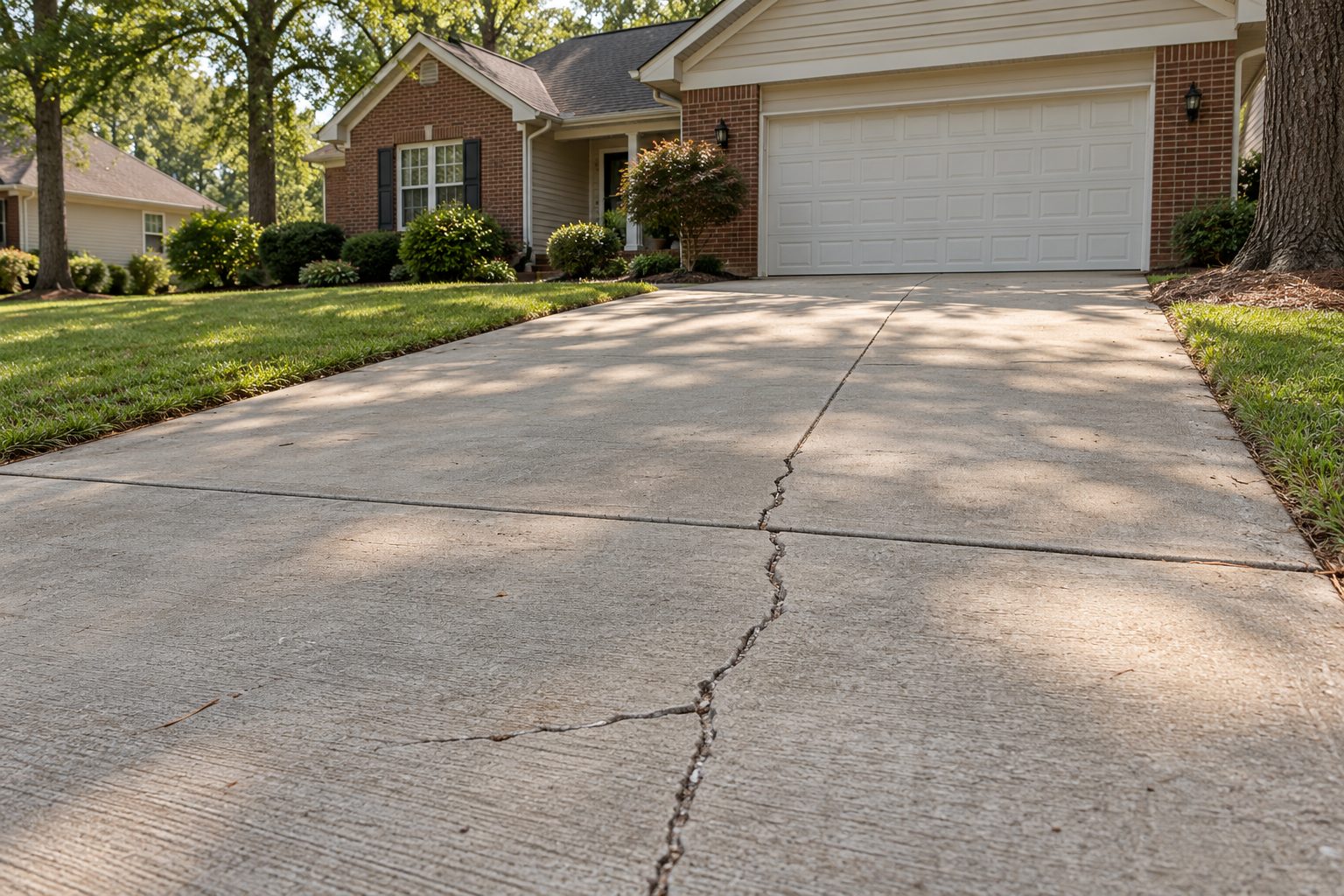
Almost every crack traces back to one of two things: the ground we build on, or how the concrete was placed and cured. Greenville sits on dense red clay, a soil that swells and shrinks with the seasons and pushes on anything above it. Add humid summers, the occasional hard freeze, and heavy Upstate rain, and you have a climate that tests every slab poured in it.
The encouraging news is that the cracks that actually matter are largely preventable. They come down to preparation, drainage, and workmanship, all within your control when you hire the right crew. This guide explains why concrete cracks here, which cracks are worth worrying about, and how to keep a slab solid for decades.
Why Concrete Cracks in the Upstate
Concrete is strong when squeezed but weak when pulled apart, so it cracks when something stretches it faster than it can resist. Around Greenville, a few local forces do most of that pulling.
Red Clay Soil Movement
The biggest cause of cracking here is the soil. Red clay is what engineers call an expansive soil, meaning it changes volume with moisture.
- It swells in wet seasons, lifting and pushing on the slab above.
- It shrinks in dry spells, leaving gaps the slab can sink into.
- This cycle repeats yearly, cracking any slab not properly supported.
Poor Drainage and Water
Water drives the clay’s movement, so where it goes decides a lot. When drainage carries water toward or beneath a slab, the clay underneath stays wet and unstable.
- Downspouts emptying beside a driveway keep the base saturated.
- Yards sloping toward the slab pool water where it does the most damage.
- A waterlogged subgrade loses its ability to carry the weight above it.
Weather and Temperature Swings
Our climate adds its own stresses on top of the soil. Heat and cold each attack concrete in a different way.
- Summer heat pulls moisture from a fresh pour too fast, causing shrinkage cracks before it cures.
- A winter freeze can damage concrete that has not yet reached full strength.
- Freeze and thaw cycles widen existing cracks as trapped water expands.
Installation and Curing Mistakes
Even good soil cannot save a rushed pour. The workmanship behind the slab matters as much as the ground.
- Missing control joints leave cracks nowhere planned to go.
- Too much water in the mix weakens the concrete as it hardens.
- Cutting the curing time short stops the slab from ever reaching full strength.
Which Cracks Should You Worry About?
Not every crack is a problem. Knowing what you see tells you whether to relax or make a call.
Normal, Minor Cracks
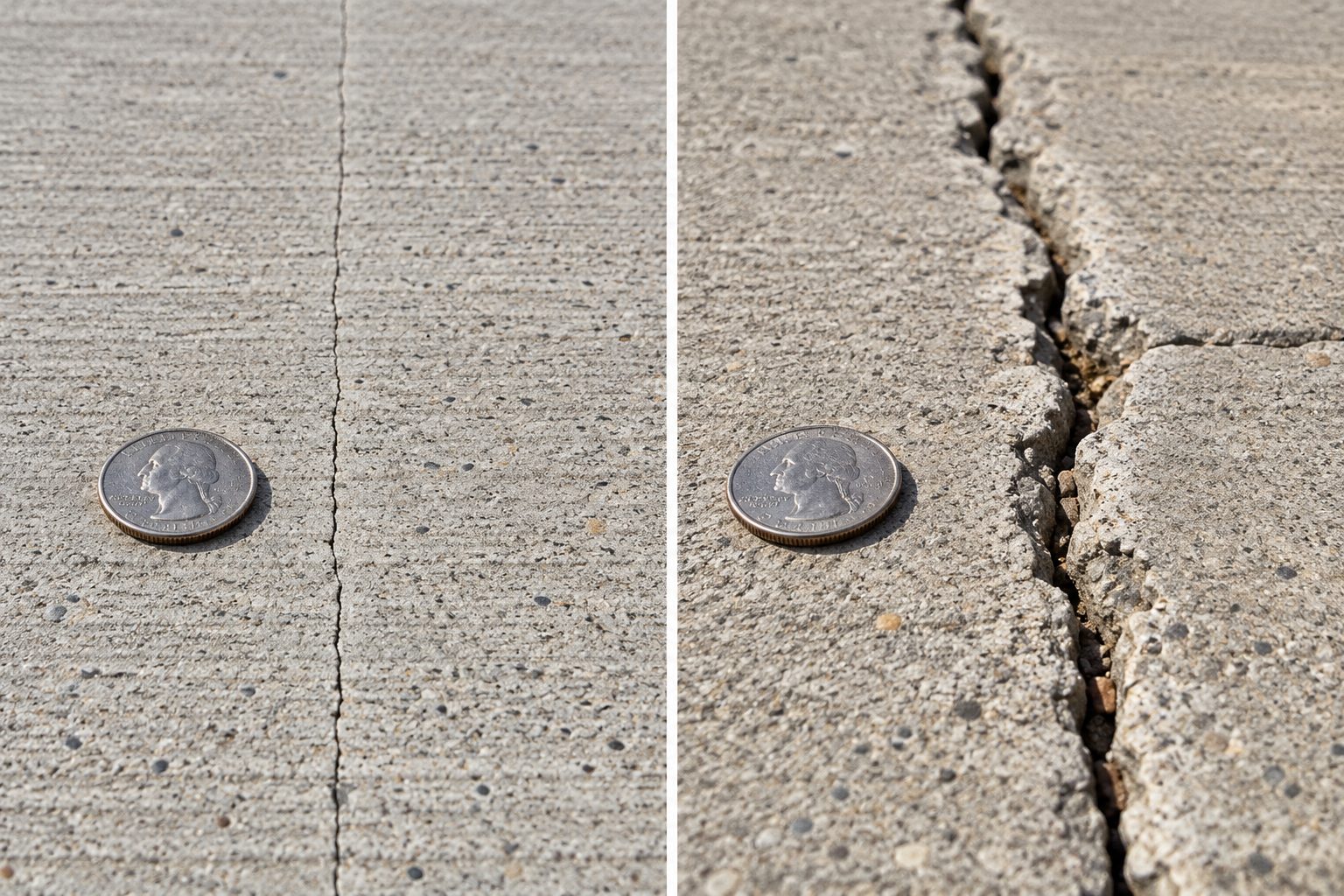
Some cracks are cosmetic and expected as concrete cures and settles. They rarely threaten the slab and are easy to seal.
- Hairline cracks thinner than the edge of a credit card.
- Fine cracks along control joints, which are doing their job.
- Shallow surface crazing that looks like cracked glass but stays on top.
Cracks That Signal Trouble
Other cracks mean something shifted underneath. These deserve a professional look sooner rather than later.
- Cracks wider than a quarter inch, or ones that keep growing.
- Uneven cracks where one side has lifted higher than the other.
- Cracks paired with pooling water, sinking sections, or a slab pulling from the house.
How to Prevent Concrete Cracks
Here is the part that protects your investment. Nearly every serious crack can be prevented, and the work that prevents it happens long before the truck arrives.
Before the Pour
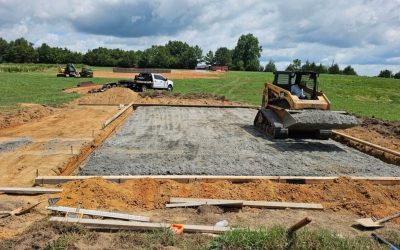
The base under the slab decides its fate on clay soil. Getting the ground right is the single most effective way to prevent cracking.
- Excavate to depth and remove loose or disturbed soil.
- Compact a gravel sub-base for a stable, draining foundation.
- Grade the site so water always runs away from the slab.
During and After the Pour
The pour itself and the upkeep that follows carry the rest of the load. These practices keep small issues from becoming structural ones.
- Add rebar or wire mesh so the slab resists tension.
- Place control joints correctly and cure the concrete fully.
- Seal the surface, keep water directed away, and fill small cracks early.
Why a Local Contractor Makes the Difference
Preventing cracks comes down to understanding Greenville’s ground, and that is knowledge you cannot fake. A crew that pours on red clay every week knows how deep to dig, how to build a base that survives our wet and dry swings, and where water wants to travel on your lot. That experience is the line between a slab that lasts thirty years and one that fails in three.
Most of that protection is set during prep, which is why our approach to professional site grading and drainage matters as much as the pour. If you are dealing with an existing issue, our guide to common concrete driveway problems in Greenville covers repair options, and our concrete driveway installation page shows how we build for durability from the base up. For the standards behind concrete mixing and curing, the American Concrete Institute is a trusted reference.
If you have a crack that worries you or a project you want done right, the smartest move is an assessment from a crew that knows local soil. Sampson Concrete installs and repairs concrete across Greenville, Easley, Greer, and Simpsonville, building every slab to handle our clay and climate. Reach out for a free estimate and we will help you protect your investment.
Frequently Asked Questions
Are hairline cracks in my concrete a problem?
Usually not. Hairline cracks are a normal part of curing and settling, and they rarely affect the slab’s strength. Only be concerned if they widen noticeably or one side starts to lift.
Can cracked concrete be repaired, or does it need replacing?
It depends on the cause and severity. Minor surface cracks can often be sealed or filled, while cracks tied to soil movement or a failing base may need extensive repair or replacement. A professional assessment is the only way to know which fits your slab.
How soon can concrete crack after being poured?
Shrinkage cracks can appear within the first day or two if the slab dries too fast, common in summer heat. Cracks from soil movement or poor drainage show up later, over the first few seasons as the clay cycles through wet and dry.
Does sealing concrete really prevent cracks?
Sealing will not stop cracks from soil movement, but it blocks the moisture behind surface damage and freeze-thaw cracking. Paired with good drainage and a proper install, it is a worthwhile layer of protection for any outdoor slab.