Planning a detached garage, a workshop, or a barndominium in Greenville, South Carolina? One of the first and most important decisions is the foundation under it. For most of these buildings the choice comes down to two options: a monolithic slab or a stem wall foundation. They cost different amounts, suit different lots, and perform differently on our red clay soil, so picking the right one from the start saves you money and headaches later.
The short version is that a monolithic slab is the faster, cheaper choice for a flat lot, while a stem wall handles slope and larger loads better. The real answer depends on your ground, your building, and how you use it. This guide covers how each works, what they cost, and which fits a garage, shop, or barndominium in the Upstate.
What Is a Monolithic Slab?
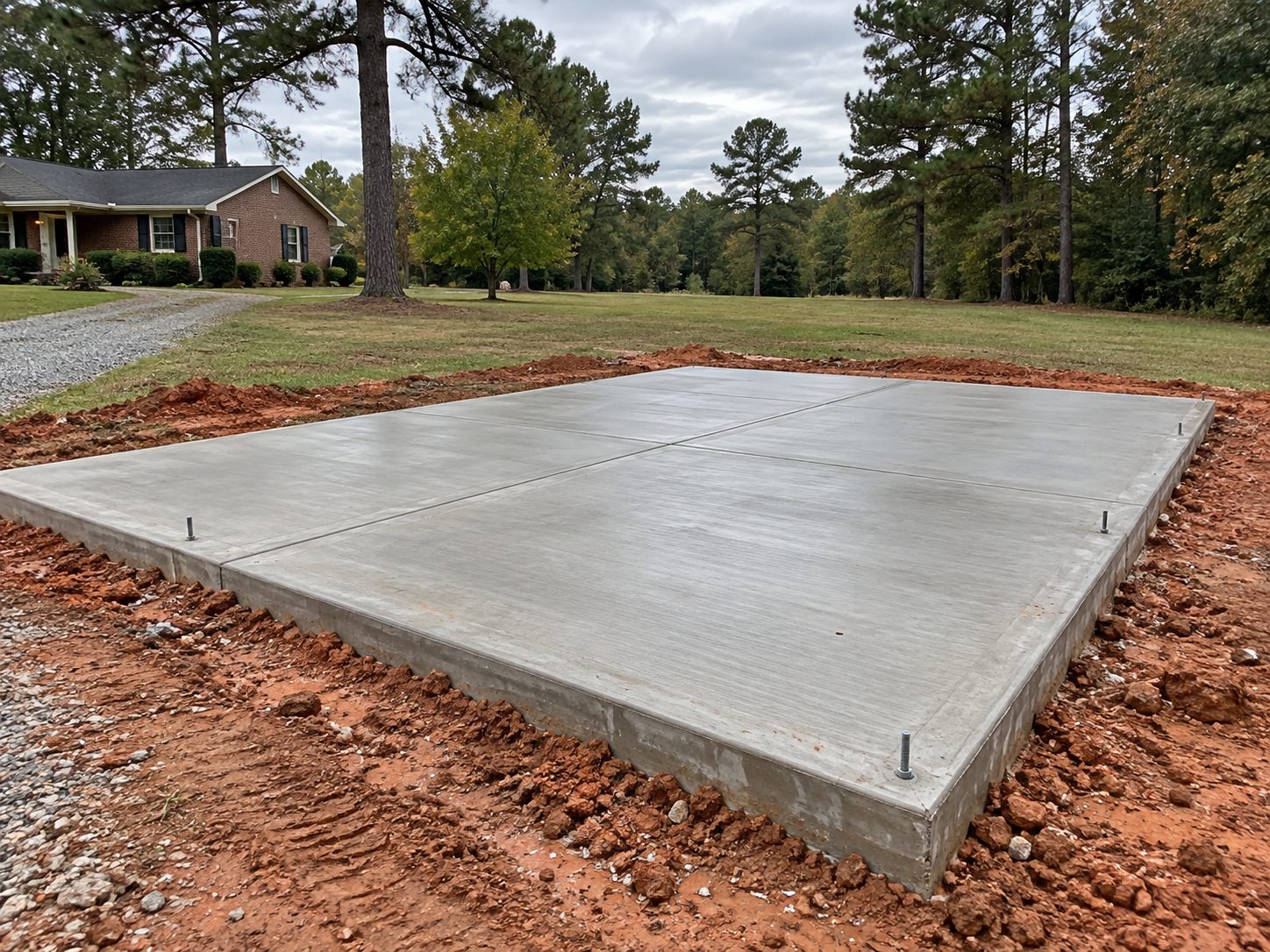
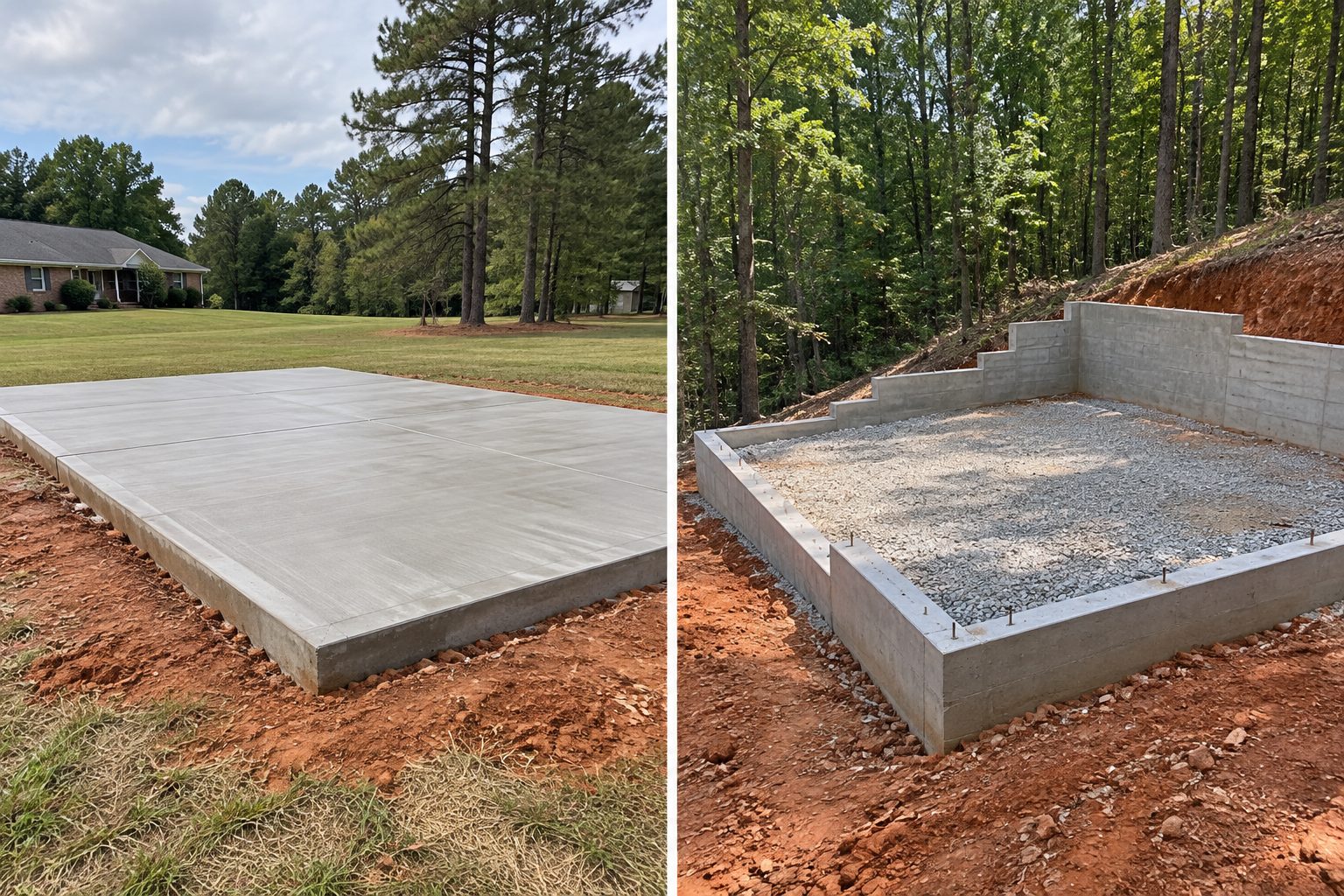
A monolithic slab is poured as one continuous piece. The edge footing and the floor slab go down together in a single pour, creating one solid unit. It is the most common slab-on-grade choice for outbuildings across the Southeast.
Why Builders Choose It
For the right project, a monolithic slab is hard to beat on speed and value. Its strengths fit a typical garage or shop on level ground.
- A single pour means a shorter build and lower labor cost.
- Fewer seams mean fewer weak points where cracks can start.
- The slab doubles as the finished floor, ready for vehicles or equipment.
Where It Falls Short
The tradeoffs show up when the ground is not cooperative. A monolithic slab has real limits on certain sites.
- It needs a relatively flat, well-drained lot to work properly.
- It offers no crawl space, so utilities are harder to reach later.
- On a slope, the grading required can cancel out its cost advantage.
What Is a Stem Wall Foundation?
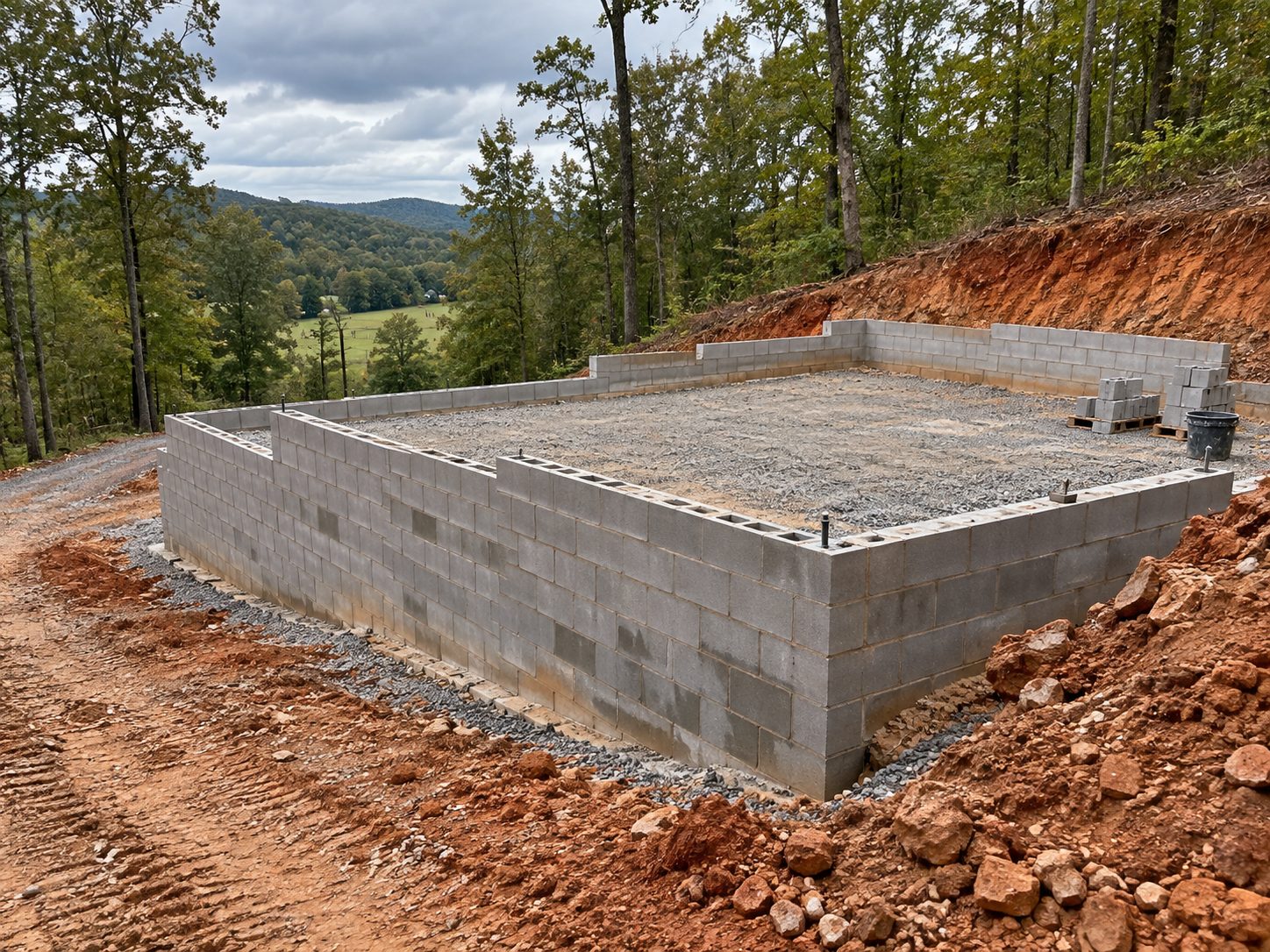
A stem wall foundation is built in stages. A footing goes in below the frost line, short walls rise from it, and the slab sits on top. This design lifts the structure and lets the wall height vary across an uneven lot.
Why Builders Choose It
A stem wall shines where a flat slab struggles. It is the stronger pick for demanding sites and bigger buildings.
- It adapts to sloped or uneven ground without massive excavation.
- It raises the structure for better protection from moisture.
- It handles heavier loads, which matters for larger shops and barndominiums.
Where It Falls Short
That capability comes at a price. For a simple building on flat ground, a stem wall can be more than you need.
- It costs more in both labor and materials.
- It takes longer to build because of the multiple stages.
- On a flat, stable lot, the extra structure may be unnecessary.
Cost Comparison for Upstate Projects
Cost is usually the deciding factor, so here is how the two compare. The figures below are 2026 planning ranges per square foot for our region, installed, meant as budgeting benchmarks rather than fixed quotes since your lot and soil shape the final number.
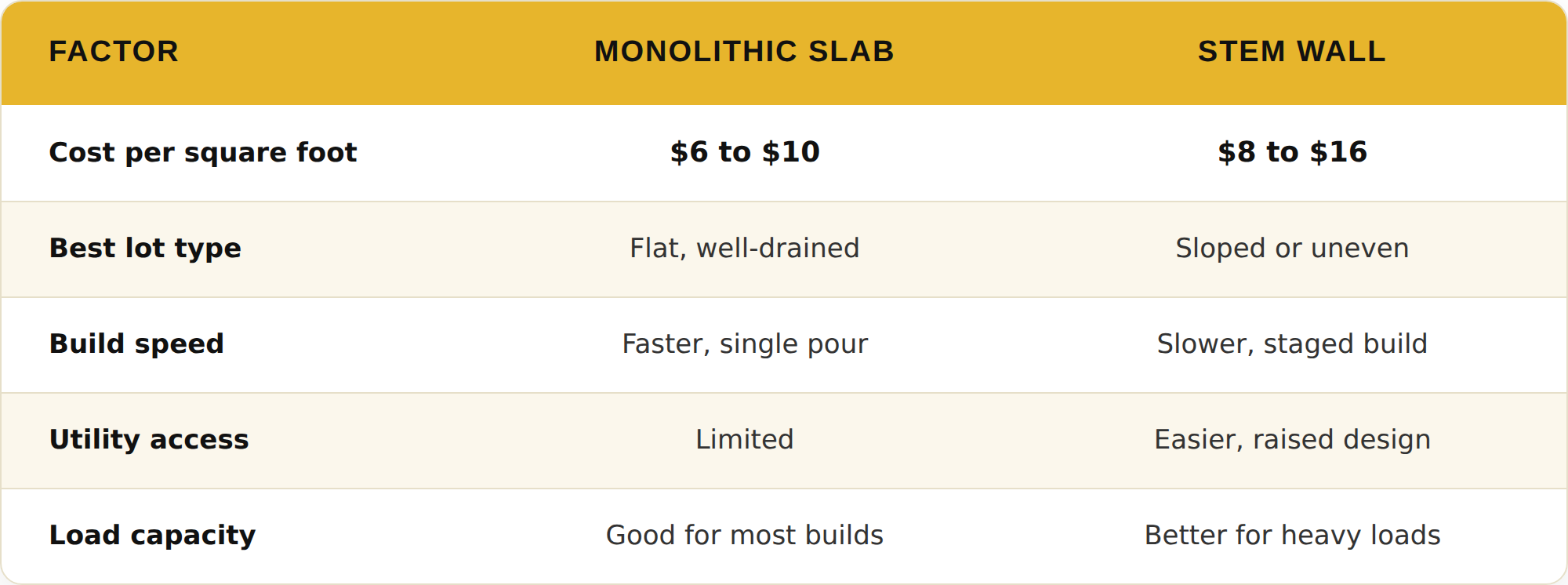
Site preparation can move either number. A lot needing extensive grading, drainage work, or deeper footings adds to the total regardless of which foundation you choose.
Which Slab Is Right for Your Building?
The best foundation depends on what you are building and where. Here is how the choice usually breaks down for the three most common projects we see in the Upstate.
Detached Garage
A standard garage on a flat lot is the classic case for a monolithic slab. It is affordable, quick, and strong enough for vehicles and storage. A stem wall only makes sense here if your lot slopes or sits in a low, wet spot.
Workshop
A shop depends on what goes inside it. For a basic workshop on level ground, a monolithic slab works well. If you plan to run heavy machinery or build on a grade, a stem wall adds the support and flexibility.
Barndominium
Barndominiums lean toward stem walls more often than the other two. They are larger, they combine living and working space, and they often sit on rural, sloping lots where a stem wall’s handling of grade and heavier loads pays off. A flat-lot barndominium can still use a monolithic slab, but the site usually decides.
Why the Upstate's Red Clay Matters Either Way
Whichever foundation you choose, our soil demands respect. Greenville sits on dense red clay that swells when wet and shrinks when dry, putting constant pressure on anything above it. A slab or stem wall poured without proper prep will eventually move with that clay.
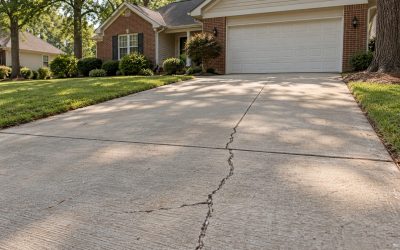
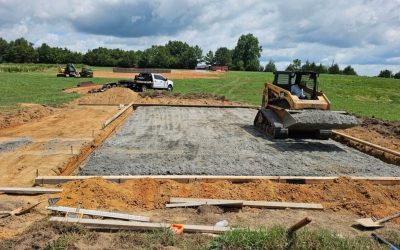
Good site work protects your investment. That means excavating to depth, compacting a stable gravel base, and grading so water drains away. These steps matter as much as the foundation type, which is why our concrete foundation guide for Greenville goes deeper into how local soil shapes every pour. To see what happens when prep is skipped, our guide to why concrete cracks in Upstate SC covers the warning signs.
Why a Local Contractor Makes the Difference
Choosing between the two is really a question about your specific lot, and that is where local experience pays off. A crew that pours foundations across Greenville every week can read your site, factor in the clay and the slope, and recommend the option that fits your building and budget. That judgment is hard to get from a price sheet alone.
The right call also depends on getting the groundwork right, which is why our professional site grading and drainage is built into every foundation we pour. For the standards behind slab design and reinforcement, the American Concrete Institute is a solid reference.
If you are planning a garage, shop, or barndominium, the smartest first step is an on-site assessment. Sampson Concrete builds monolithic slab and stem wall foundations across Greenville, Easley, Greer, and Simpsonville, matching the foundation to your lot and your plans. Reach out for a free estimate and we will help you start on solid ground.
Frequently Asked Questions
Is a monolithic slab strong enough for a barndominium?
It can be, if the lot is flat and stable and the building is sized for it. Larger barndominiums or those on sloped ground usually do better on a stem wall, which handles heavier loads and uneven terrain.
Can you build a stem wall foundation on a flat lot?
Yes, though it is often more than a flat lot needs. On level, well-drained ground a monolithic slab usually delivers the same durability for less. A stem wall still makes sense if you want raised utility access or extra load capacity.
Which foundation lasts longer?
Both can last for decades when built correctly, because longevity depends far more on site prep than on the foundation type. Proper base compaction, drainage, and reinforcement keep either option stable on our clay soil.
Do garage and shop slabs need a permit in Greenville?
Usually yes, since a structure on the slab makes it a permitted project. Requirements vary between the City of Greenville and the county, and your contractor typically handles the permit.