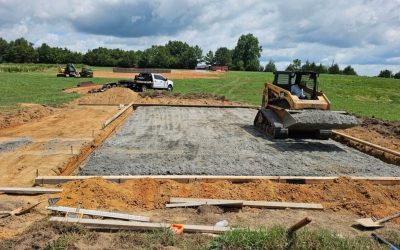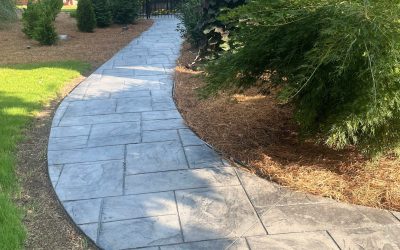
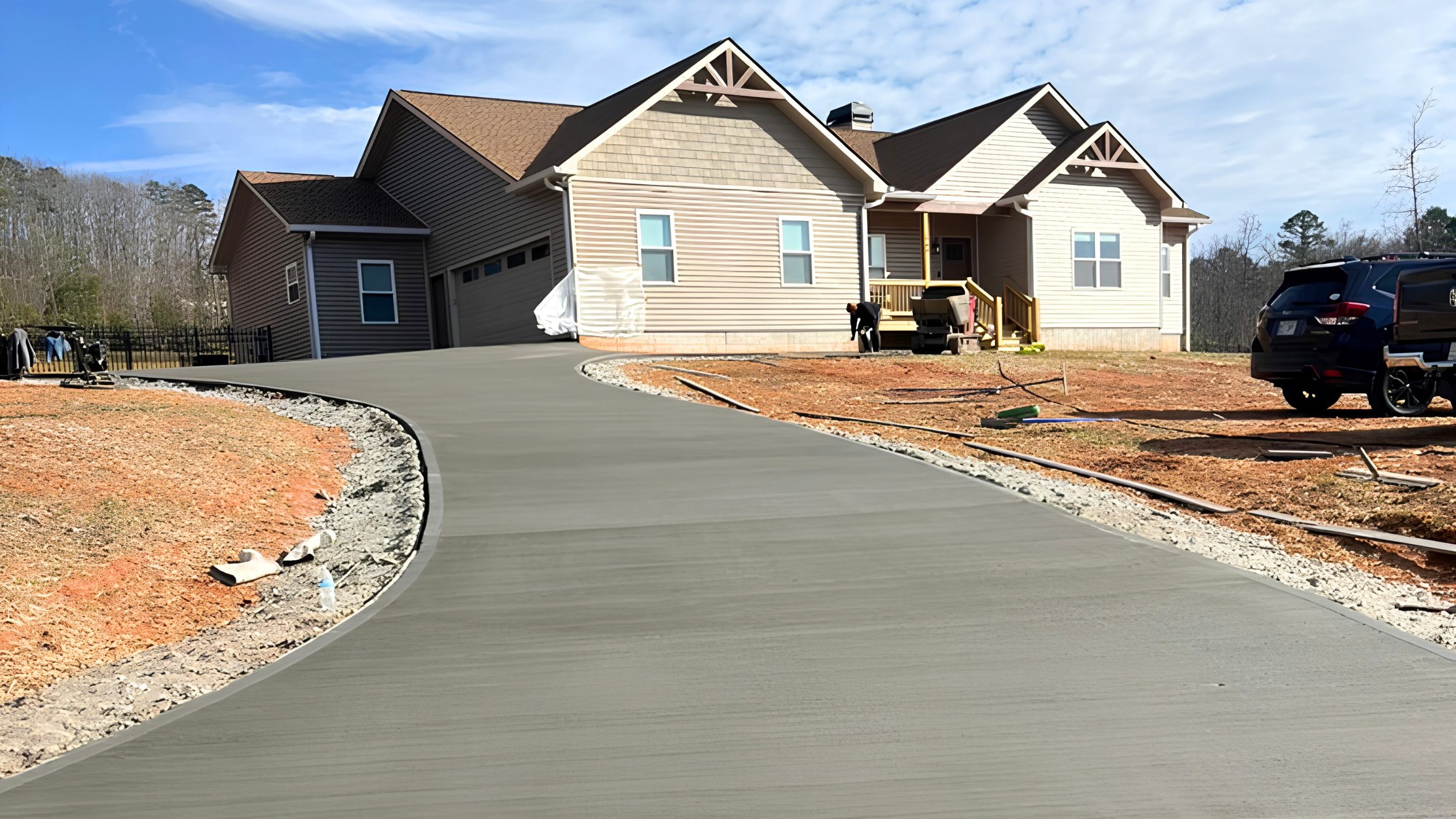
Planning a driveway extension, back patio, or new sidewalk in Upstate South Carolina? Before you schedule the truck, one question can save you weeks of headaches: do you need a concrete permit in Greenville? The honest answer is that it depends on what you are pouring and where. Some projects need nothing more than a good contractor and a clear weekend. Others can trigger a building permit, a zoning check, or an encroachment permit from the county before a single yard of concrete is placed. Get it wrong and you risk a stop-work order, a fine, or the very expensive job of tearing out finished work that sat too close to a property line.
This guide walks through when you need a permit, when you do not, and the local rules that trip people up around here. We pull permits and pour concrete across Greenville every week, so this is the same rundown we give homeowners who call us before they break ground.
When You Do Need a Permit
Not every pour needs paperwork, but a good number do. Here are the situations where you should count on some form of permit or official sign-off.
Right-of-way and driveway aprons
This is the big one people miss. The moment your work touches the public road right-of-way, you are into permit territory. A new driveway connecting to a county-maintained road, a widened apron, a curb cut, or a culvert in the roadside ditch all require an encroachment permit before you start. Greenville County is strict about this. There are rules on sight distance, so a driveway cannot go in below the crest of a hill or in a blind curve. There are even rules on pipe: black plastic HDPE pipe is not allowed for driveway culverts, only reinforced concrete, corrugated metal, or gray double-walled polypropylene. If any of that sounds like your project, the county’s Public Works division is the place to start, and it is worth a quick call to 864-467-7016 before you pour anything near the road.
Covered patios and anything structural
A plain slab is one thing. A patio with a roof over it is another. Once you add a cover, a pergola with footings, a porch, or any structural element, the project generally needs a building permit because now there is a structure involved, not just flatwork. The same goes for a slab that will support something structural, like a garage or a room addition. If concrete is going to hold up a building, expect to permit it.
Commercial and rental work
The rules tighten fast on non-owner-occupied property. Commercial concrete jobs face stricter city and county review across the board. And in Greenville County, any work on a residential rental property has to be done by a South Carolina licensed contractor, not the owner. That is a specific local requirement worth knowing if you are a landlord planning to save money with a DIY pour.
Utilities, grading, and drainage
If your project involves electrical, plumbing, or gas, that triggers a permit on its own. So can significant grading that changes how water moves across your lot, since Greenville factors stormwater management into what it will approve. Concrete that meaningfully alters your drainage is not automatically permit-free just because it sits at ground level.
When You Do You Not Need a Permit
Here is the good news. A large share of everyday residential concrete work falls below the permit threshold, which is why so many patios and walkways go in without a trip to the permit office.
Ground-level, uncovered flatwork
As a general rule in Greenville, a ground-level slab or patio does not need a building permit when it checks these boxes: it is detached from the house, it is uncovered with no roof, it sits less than 30 inches above grade, it involves no electrical, plumbing, or gas, and it does not significantly change your lot’s grading or drainage. A typical backyard patio, a walkway between the driveway and the front door, or a small pad for a grill usually clears all five without issue.
The catch most homeowners miss
Here is where people get burned. Even when no building permit is required, your project still has to obey zoning setbacks and lot coverage limits. Setbacks are the minimum distances your improvements have to sit from each property line, and they do not disappear just because your patio is permit-exempt. Pour a slab three feet from the line when your zone requires ten, and you can be forced to remove it, permit or no permit. This is exactly why a quick zoning check is smart even on a job that seems too simple to bother with. It costs nothing to verify and a fortune to undo.
Do not forget your HOA
There is one more layer that has nothing to do with the city or county at all. If you live in a neighborhood with a homeowners association, your HOA may have its own rules about concrete work, and those rules can be stricter than anything the government requires. Plenty of Upstate subdivisions restrict where you can add a patio, what a driveway extension can look like, or whether decorative finishes are allowed. An HOA approval is separate from a building permit, and skipping it can mean fines or a forced removal even when the city or county had no objection. If your neighborhood has a covenant, read it or ask your board before you pour.
City of Greenville vs. Greenville County: Why Your Address Decides the Rules
This is the single most confusing part for local homeowners, so it gets its own section. The rules that apply to you depend on whether your property sits inside the City of Greenville limits or out in unincorporated Greenville County. They are two different jurisdictions with two different permit offices, and an address with a Greenville mailing name does not tell you which one you are in.
Two sets of rules, one region
If you are inside the city limits, the City of Greenville’s building and zoning departments handle your permits and setbacks. If you are in the unincorporated county, which covers a huge share of the metro including many neighborhoods people casually call Greenville, you deal with Greenville County. Easley, Greer, and Simpsonville each add their own municipal layer on top of that. The requirements are similar in spirit but differ in the details, from setback distances to fee schedules to how long review takes.
How to find out which one you are in
The fastest way is to ask your contractor, who deals with both offices routinely and can usually tell from your address. You can also check your property record through the county or use the city’s online zoning lookup. The point is simply this: do not assume a neighbor’s experience two streets over applies to you, because two streets over might be a different jurisdiction entirely.
When a permit is required, the process is more predictable than most people fear. Knowing the shape of it helps you plan a realistic timeline.
What the Permit Process Actually Looks Like
The basic steps
For a permitted residential concrete job, you are generally looking at submitting an application with a site plan that shows where the concrete goes and how far it sits from each property line, a review by a permit technician who checks setbacks, road frontage, and floodplain status, approval and payment of the permit fee, and then an inspection tied to the work. If a contractor pulls the permit, they have to hold a valid South Carolina license and their name goes on it.
Timelines and fees to plan around
Review is not instant. In peak building season, which runs spring through summer, county and city review queues stretch, and a couple of weeks of turnaround is a reasonable expectation for a straightforward residential job. Fees are their own line item, and worth noting: Greenville County raised residential and commercial building permit fees by 20 percent as of July 1, 2025, so older numbers you find online may be low. Encroachment work in the right-of-way can also carry a deposit that is returned once the work passes compliance. Your contractor should be able to give you a current, realistic figure for your specific scope.
Why This Is Easier With a Local Contractor
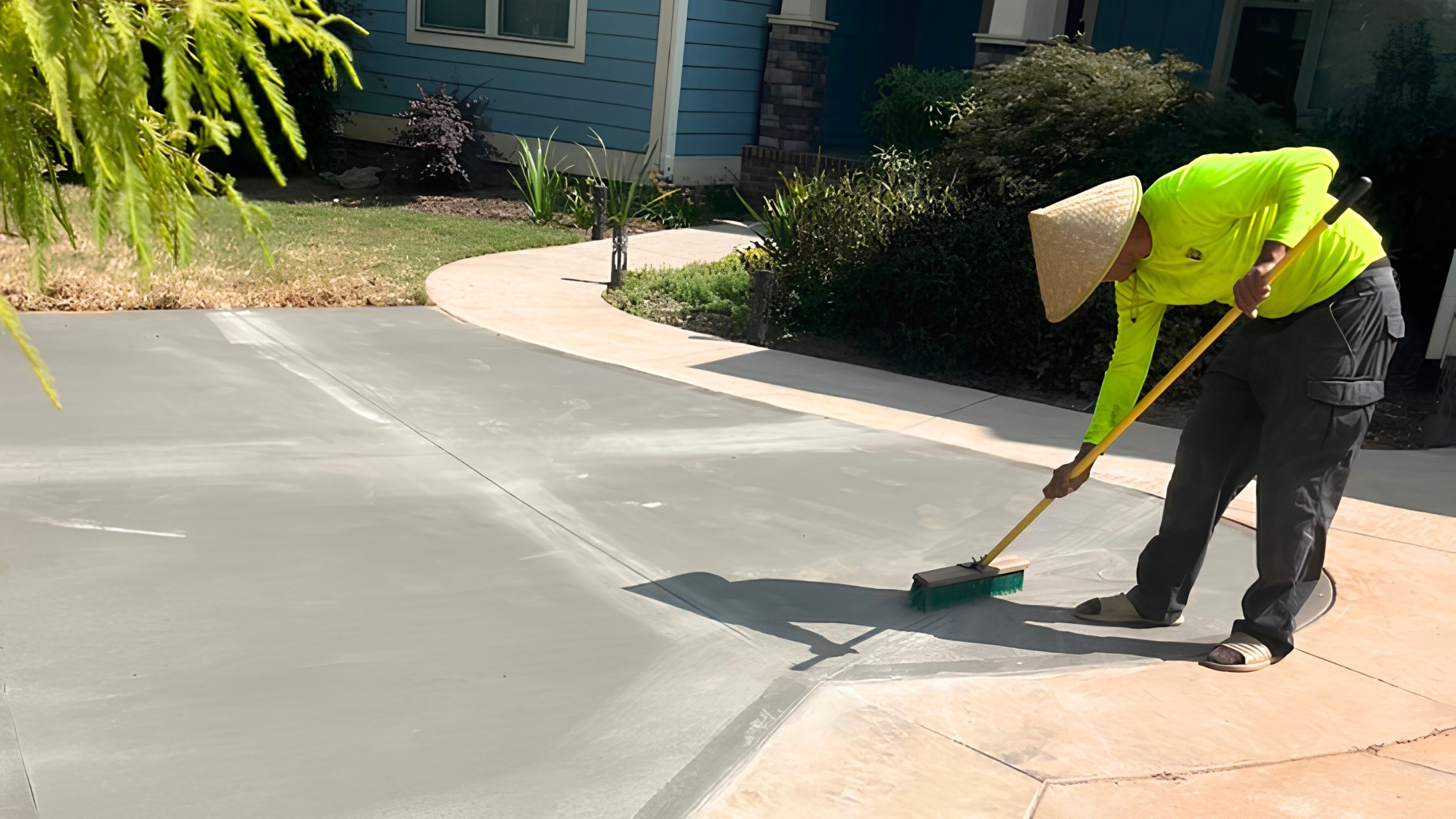
You can absolutely navigate Greenville’s permit landscape yourself. But there is a reason most homeowners hand it off. A contractor who pulls permits in both the city and the county every week knows which jurisdiction your address falls in, knows what will fly with the setback and stormwater rules, and knows how to prepare a site plan that clears review the first time instead of coming back with corrections. That local knowledge turns a confusing process into a non-event. Working with a licensed Greenville concrete contractor also satisfies the requirements that trip up DIY jobs, like the rental-property licensing rule and the encroachment standards for anything near the road. If you want to see the kind of work that clears these requirements cleanly, our concrete driveway installation in Greenville, SC page walks through how we handle projects from site plan to final pour.
The bottom line is that a permit question answered wrong is expensive, and answered right is simple. Before you commit to any concrete project near a property line or a road, it is worth a five-minute conversation with someone who does this daily.
Frequently Asked Questions
Do I need a permit to pour a concrete patio in Greenville, SC?
Usually not, if the patio is detached from the house, uncovered, less than 30 inches above grade, involves no utilities, and does not significantly change your lot’s drainage. Even then, it still has to meet zoning setback and lot coverage rules, so a quick zoning check is smart before you pour.
Do I need a permit for a new concrete driveway in Greenville?
If the driveway connects to a public road or involves work in the right-of-way, such as a new apron, curb cut, or culvert, you need an encroachment permit from Greenville County before starting. A driveway poured entirely on your own property, away from the road, is more likely to be exempt, but the connection point is what triggers the permit.
What happens if I pour concrete without a required permit?
You risk a stop-work order, fines, and in the worst case being ordered to remove finished work, especially if it violates a setback. Unpermitted work can also complicate a future home sale or appraisal. The cost of pulling a permit is minor next to the cost of tearing out a slab.
Is the permit process different inside Greenville city limits versus the county?
Yes. The City of Greenville and unincorporated Greenville County are separate jurisdictions with separate permit offices, setbacks, and fees, and nearby towns like Easley, Greer, and Simpsonville add their own rules. Your exact address determines which set applies, which is why confirming your jurisdiction first matters.
How long does it take to get a concrete permit in Greenville?
For a straightforward residential job, expect roughly a couple of weeks, though review queues run longer during the busy spring and summer season. Submitting a complete, accurate site plan is the best way to avoid delays from resubmittals.
Not Sure If Your Project Needs a Permit?
Permits do not have to be the part of your project that keeps you up at night. Whether you need a driveway that connects to a county road, a covered patio, or a simple backyard slab, the requirements come down to what you are building and exactly where your property sits. At Sampson Concrete, we pull permits and pour concrete across Greenville, Easley, Greer, and Simpsonville every week, and we handle the permit and zoning legwork as part of the job so nothing stalls once we start. Contact us today for a free estimate and we will tell you upfront exactly what your project needs.