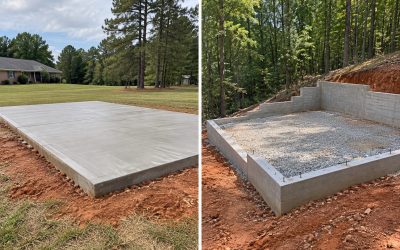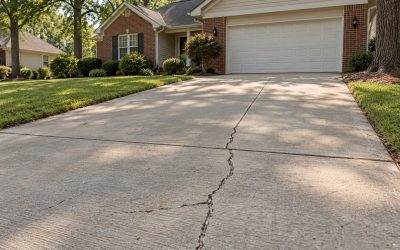
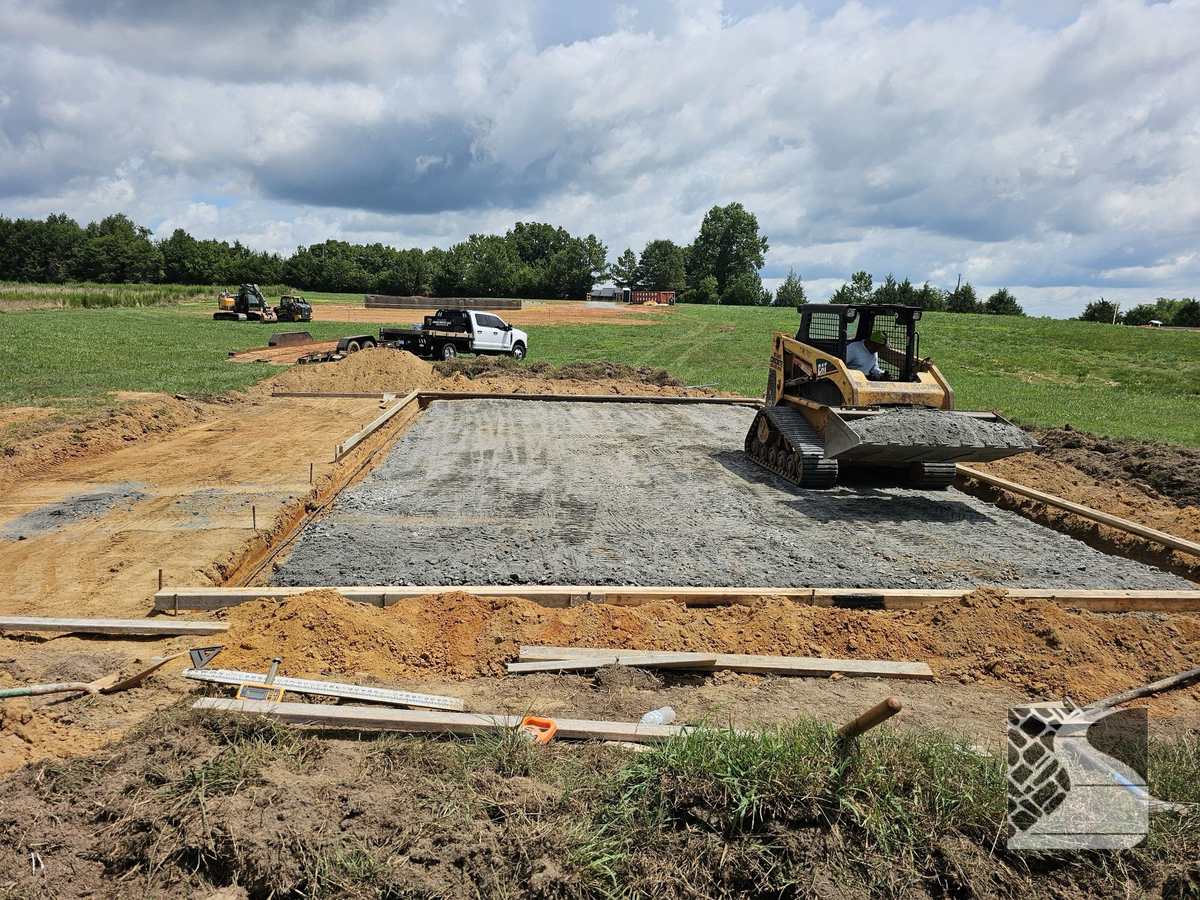
A new driveway, patio or building slab is only as good as the ground beneath it. Before the first truck arrives, the site has to be cleared, dug, graded and compacted. In Greenville, SC, concrete site prep is the stage that decides whether a slab drains well and stays level for decades or starts cracking within a few seasons.
It is also the stage homeowners see the least. Most of the work is buried under the finished surface, which makes it easy for a low bid to cut corners there. Once concrete is poured over a poorly graded base, there is no cheap way to fix it.
This guide explains what grading and site preparation include, step by step. It covers the utility call South Carolina requires, the difference between rough and fine grading, and when the county gets involved. It also shows how long the work takes and what changes the scope.
Step 1: Site assessment and utility locates
Every project starts with a walk of the property. We look at the natural slope, soil type, access for equipment and where water runs during a heavy rain. That visit sets the dig depth, the base needed and the direction the finished surface should drain.
Before any digging, South Carolina law requires a locate request. Under S.C. Code Section 58-36-60, notice must go to SC811 three to twelve full working days before excavation begins, not counting the day the request is made. Utility owners then mark their public lines with paint or flags. Private lines, such as a sprinkler system or power to a detached shop, are not marked, so point those out at the walkthrough.
Step 2: Clearing and excavation
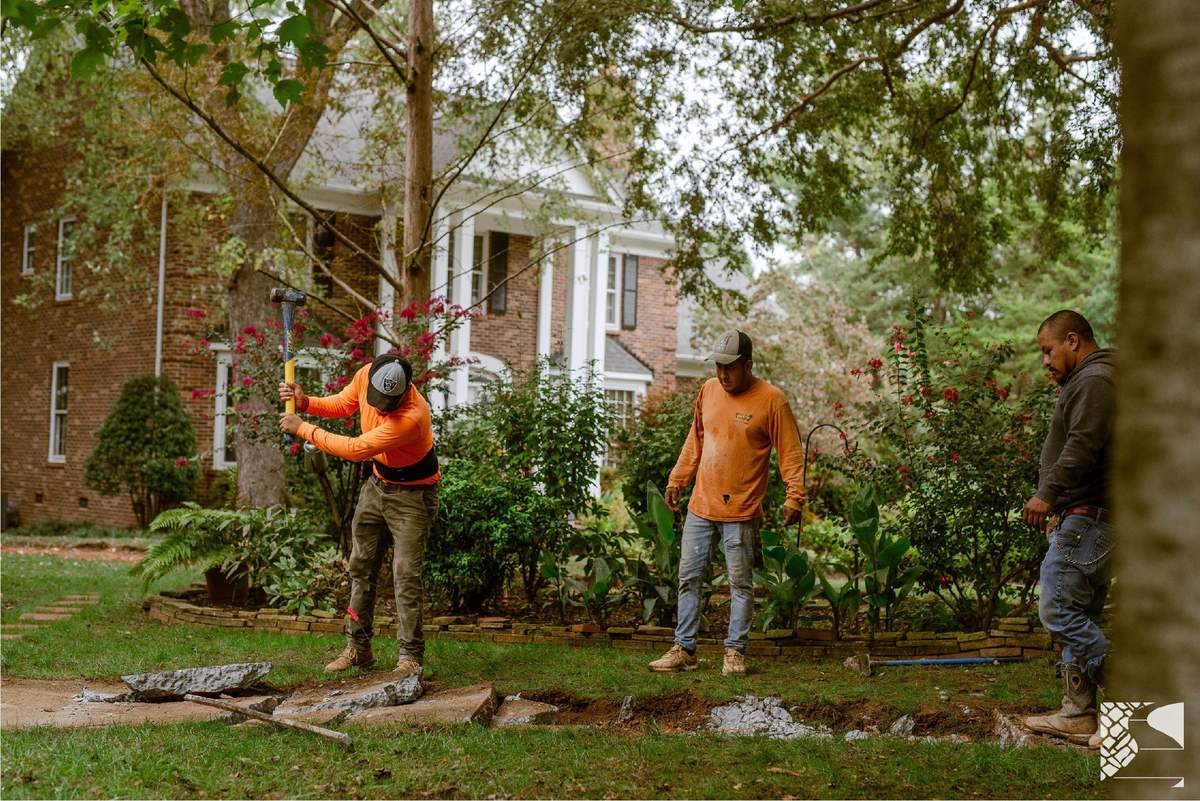
Clearing removes grass, roots, brush and debris from the work area. If an old driveway, patio or sidewalk is being replaced, the existing concrete is broken out and hauled off. Organic material has to go because it breaks down over time and leaves soft spots under the slab.
Excavation then takes the ground down to the depth the project needs. A walkway needs less depth than a driveway that carries vehicles, and a garage or building slab needs more again. Soft pockets found during the dig are removed and replaced with compacted fill instead of being covered over.
Step 3: Rough grading and fine grading
Grading happens in two passes, and each one has a different job. The table below shows how they differ.
| Stage | What it does | How it is checked |
|---|---|---|
| Rough grading | Shapes the overall lot so water moves away from structures | Slope and elevation set against the site plan |
| Fine grading | Sets the exact height and slope of the subgrade under the slab | Laser level readings across the pour area |
| Final check | Confirms drainage and depth before the base goes in | Walkthrough with the forms layout |
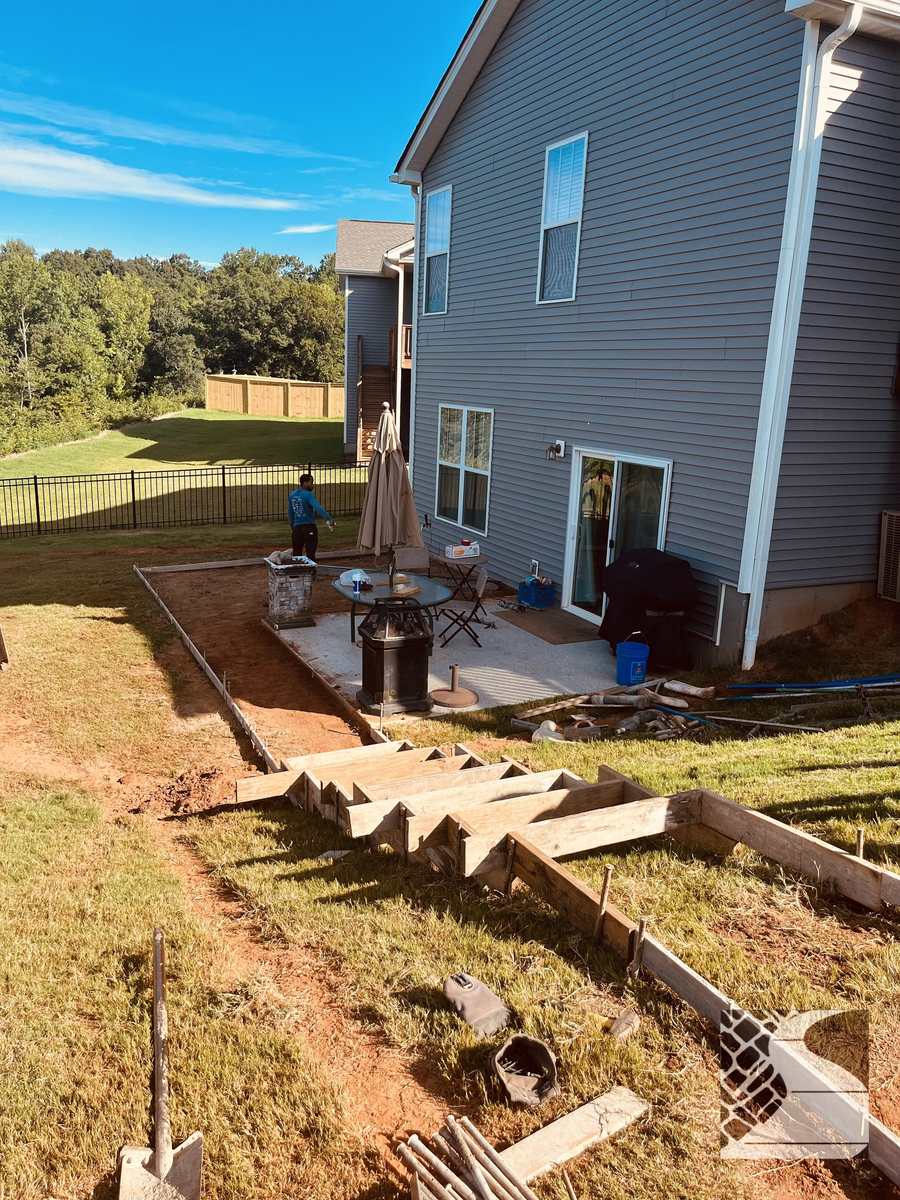
Fine grading is where precision matters most. We use laser-leveling tools so the subgrade has a consistent slope instead of low spots that collect water. Our concrete and grading services in Greenville cover both passes for slabs, driveways, patios and new construction.
Step 4: Base and compaction
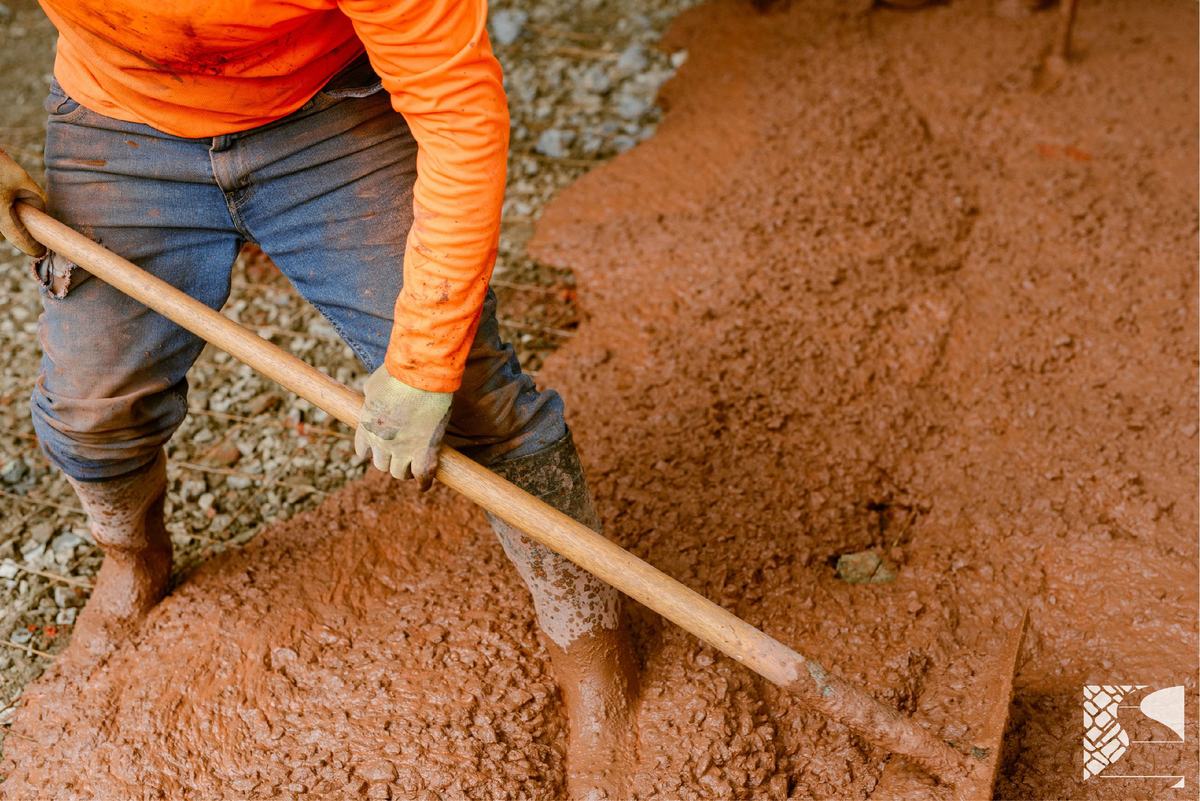
With the subgrade shaped, a layer of crushed stone goes in to form the base. Its thickness depends on the load the slab will carry and the soil underneath. The base spreads weight evenly and gives water a path away from the concrete.
Compaction is done in layers, because a plate compactor or roller only reaches so deep in one pass. This step matters more here than in many regions. Upstate red clay swells when wet and shrinks when dry, and our guide to why concrete cracks in Upstate SC shows what happens when a slab sits directly on moving clay.
Permits and erosion control on larger lots
Greenville County treats any land disturbance as subject to its stormwater rules. Erosion controls such as silt fence must be installed and maintained on every job. For a single lot outside a permitted subdivision that clears less than one acre, the building permit covers the grading work.
Clearing more than one acre is a different process. According to Greenville County Land Development, those lots need an engineer, a land disturbance permit and state stormwater coverage. Our post on concrete permits in Greenville explains the city and county differences for the concrete work itself.
How long site prep takes and what changes the scope
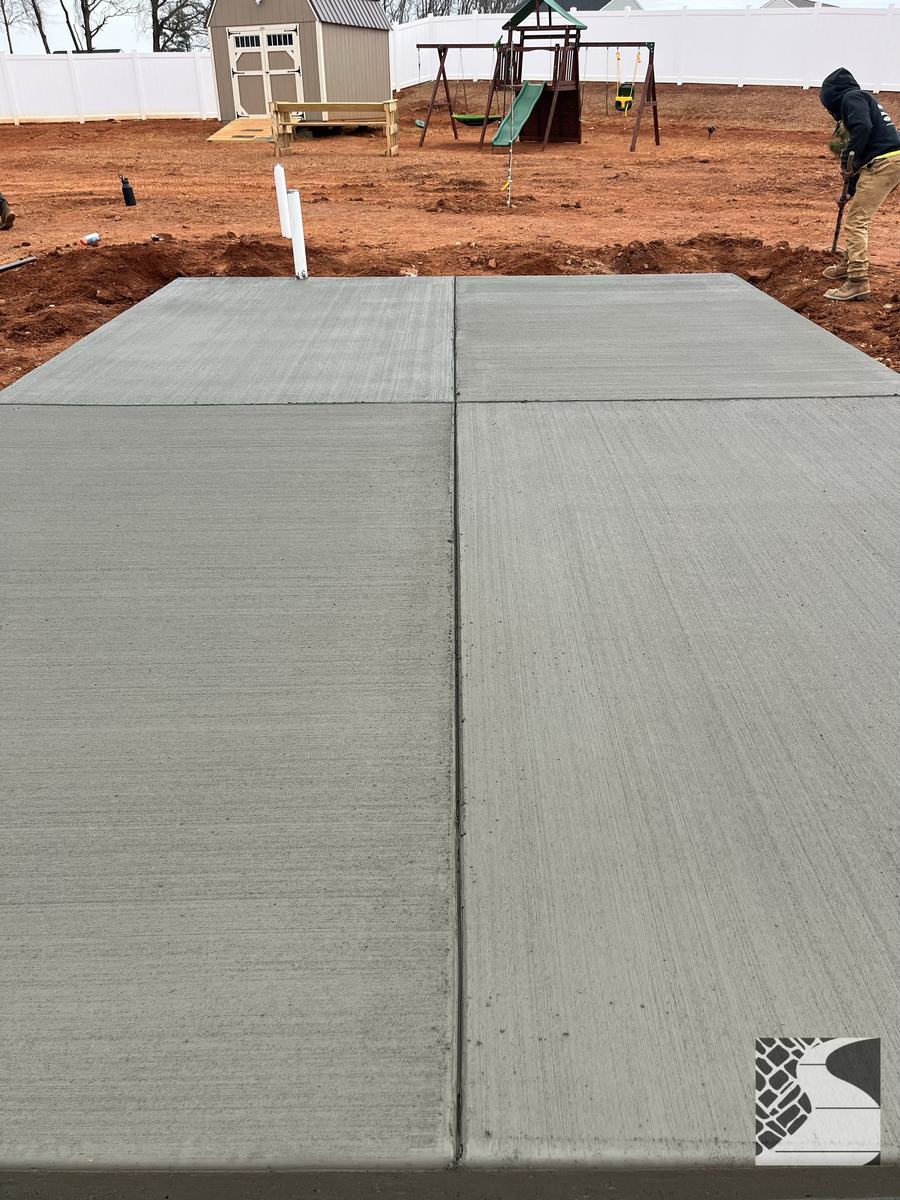
On a typical residential driveway or patio, site preparation and forming usually take one to two days. Larger slabs, foundations and sloped lots take longer. Weather can also pause the work, since wet clay cannot be compacted properly.
Several factors change the size of the job. These include the amount of slope, tree and stump removal, old concrete to break out, fill that has to be hauled in and how easily equipment can reach the site. A steep lot can also affect which foundation makes sense, as covered in our comparison of monolithic slab vs. stem wall foundations.
Frequently Asked Questions
Do gravel driveways need grading too?
Yes. A gravel driveway needs a graded, compacted subgrade and a crown or slope to shed water, or ruts and puddles form quickly. Our gravel driveway installation includes that prep.
Can you prepare a site for a building someone else is putting up?
Yes. We grade and pour slabs for garages, shops and other buildings, then coordinate timing with your builder or kit supplier. Share the building plans early so the slab size and anchor locations match.
Do I need to be home during grading?
Being there at the start of the job helps, so you can confirm property lines and private utilities with the crew. After that, the main need is clear access, with gates unlocked and vehicles moved.
Start with a solid base
Sampson Concrete Company handles grading, site prep and concrete as one job, so the ground is shaped with the finished slab in mind. We work across Greenville, Easley, Greer and Simpsonville from our office on Old Augusta Road. See how we build concrete building slabs on prepared ground, or learn more about our full land and site grading services.
Call (864) 635-3347 or request an estimate to plan your project.