A concrete patio is one of the most practical ways to improve an outdoor living space. For homeowners in Greenville, SC, it can create a cleaner backyard layout, support outdoor furniture, improve daily usability, and add long-term value to the property.
One of the first questions homeowners ask is simple: how much does a concrete patio cost in Greenville, SC?
The answer depends on patio size, site conditions, finish type, thickness, access, drainage needs, and the amount of preparation required before the concrete is poured. A small, standard broom-finished patio will cost less than a large decorative stamped patio with custom borders, color, or complex grading.
This guide explains realistic 2026 concrete patio pricing, what affects cost, how different finishes compare, and what homeowners should consider before requesting an estimate.
Average Concrete Patio Cost in Greenville, SC
In Greenville, a professionally installed concrete patio can vary widely in price depending on the project. A basic patio with standard finishing may fall within a lower range, while decorative patios require more labor, materials, and finishing time.
For 2026, homeowners can generally expect these planning ranges:
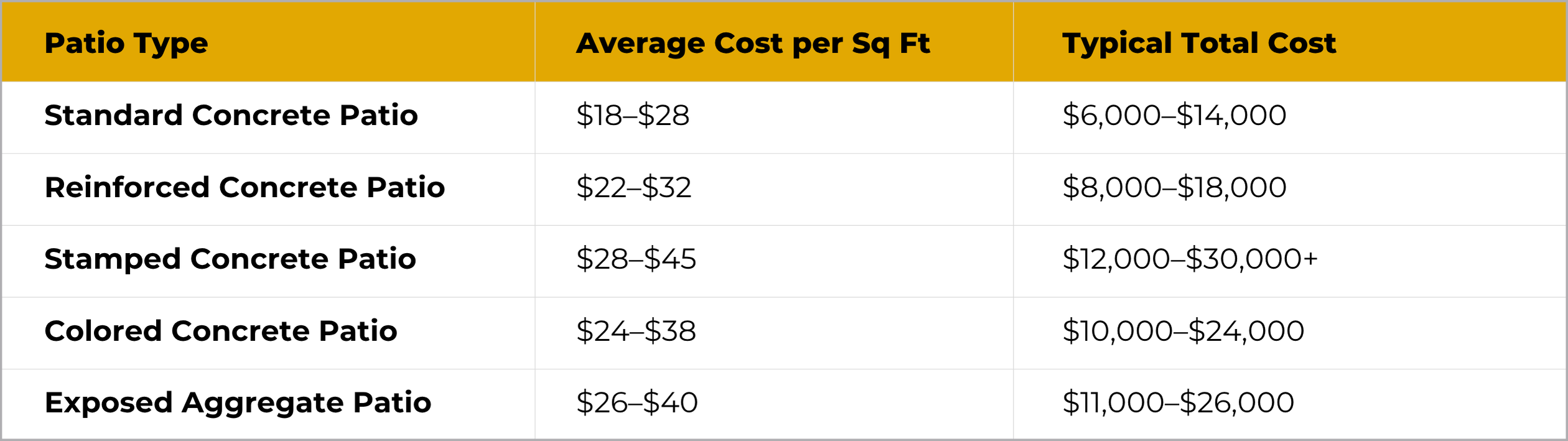
These ranges are meant for budgeting. The final price depends on the actual patio size, site preparation, finish selection, access, and project details.
A professional estimate should include more than the concrete pour itself. Proper excavation, base preparation, forming, reinforcement when needed, finishing, joint placement, and curing all affect the final result.
Why Concrete Patio Pricing Varies So Much
Concrete patio pricing is not one-size-fits-all because every property is different. Two patios with the same square footage can have different costs if one yard is flat and easy to access while the other requires grading, drainage correction, or demolition.
The biggest cost factors include:
- Patio size and shape
- Existing surface removal
- Yard access
- Soil conditions
- Slope and drainage
- Concrete thickness
- Reinforcement needs
- Finish type
- Decorative borders or color
- Steps, transitions, or connection points
A low price usually means something has been left out. Homeowners should look closely at what is included before comparing estimates.
Patio Size and Layout
Patio size has the most obvious impact on cost. Larger patios require more concrete, more labor, more base material, and more finishing time.
However, shape also matters.
A simple square or rectangular patio is usually more efficient to install. Curved edges, custom shapes, built-in sections, and multi-zone layouts require more forming and finishing work.
Common Patio Sizes
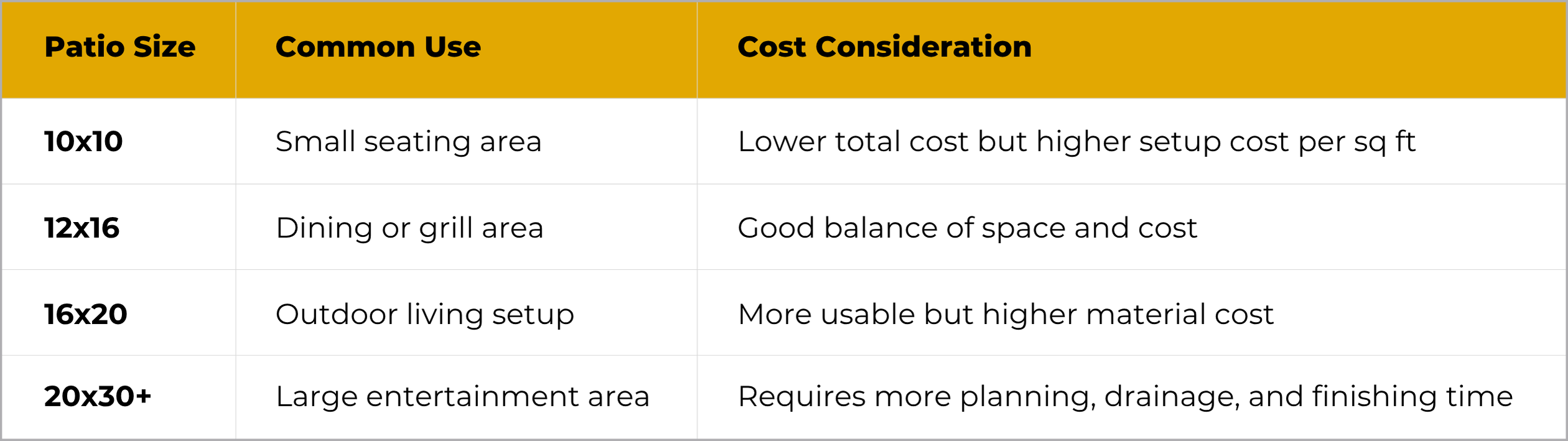
A larger patio may provide better long-term usability, but it should be planned around how the space will actually be used.
Standard Concrete Patio vs Decorative Concrete Patio
Homeowners often choose between standard concrete and decorative concrete. Both can perform well, but they serve different goals.
Standard Concrete Patio
A standard concrete patio usually includes a broom finish or smooth finish. It is practical, clean, and cost-effective compared to decorative options.
This is a good choice when the homeowner wants:
- A durable surface
- Simple appearance
- Lower upfront cost
- Easy maintenance
- Functional outdoor space
Standard concrete works well for patios, grill areas, small seating spaces, and backyard walkways.
Decorative Concrete Patio
Decorative concrete includes stamped patterns, exposed aggregate, colored concrete, or custom borders.
This is a better fit when the patio is highly visible or intended to function as a designed outdoor living space.
Decorative concrete usually costs more because it requires additional materials, specialized finishing, and more installation time.
Stamped Concrete Patio Cost in Greenville, SC
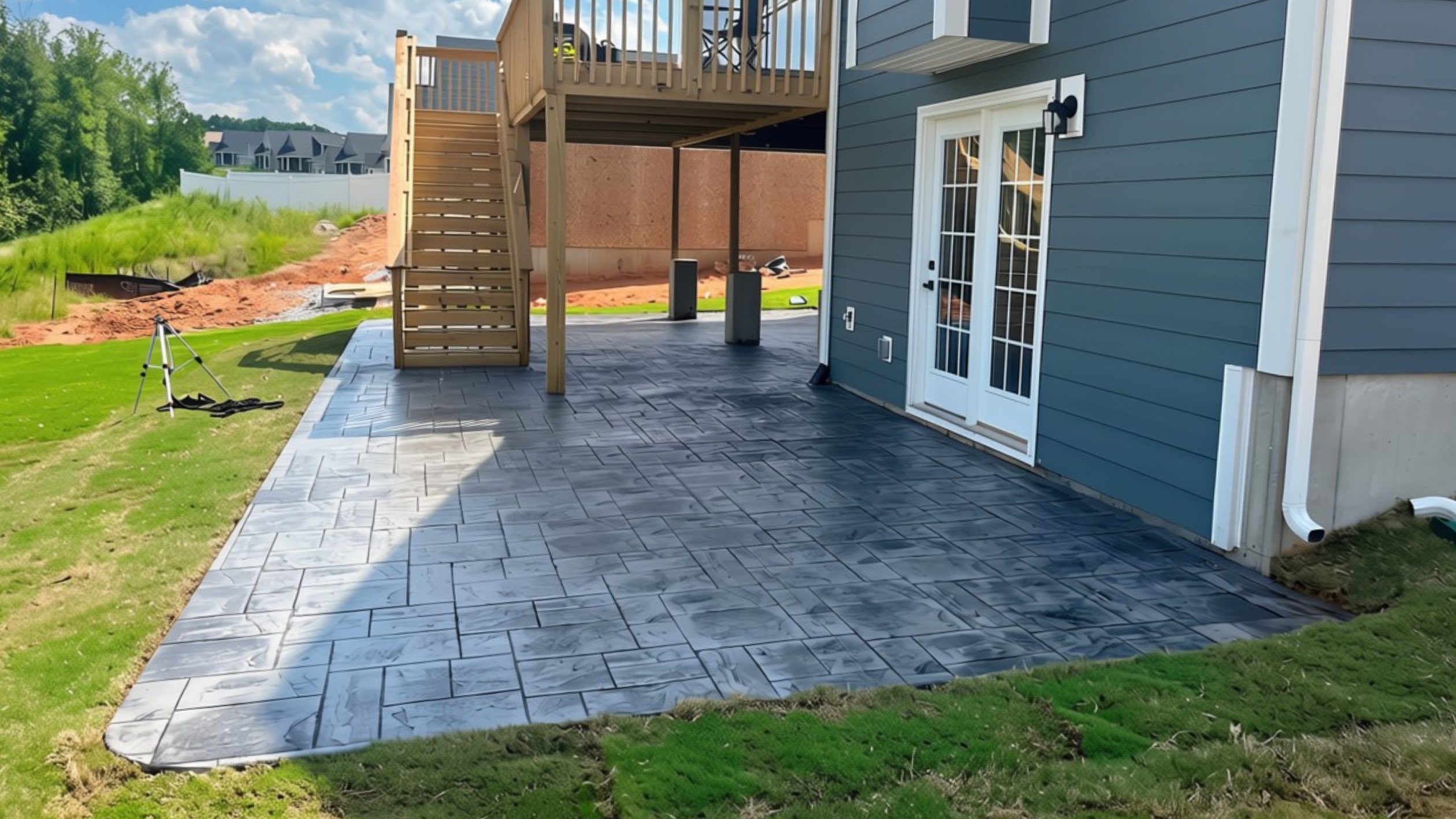
Stamped concrete patios are popular because they create the appearance of stone, slate, brick, or pavers while still using a poured concrete slab.
Stamped concrete generally costs more than standard concrete because the contractor must manage color, pattern layout, stamping timing, release agents, sealing, and detailed finishing.
Common stamped concrete cost factors include:
- Pattern complexity
- Number of colors
- Border design
- Patio size
- Sealer requirements
- Surface texture
- Access to the project area
Stamped concrete can be worth the added cost when appearance is a major priority. It works especially well for backyard entertainment areas, covered patios, poolside spaces, and homes with upgraded landscaping.
What Is Included in a Concrete Patio Estimate?
A complete concrete patio estimate should explain the full scope of work. Homeowners should avoid comparing estimates based on price alone if the included work is not the same.
A professional patio estimate may include:
- Site evaluation
- Patio layout and measurements
- Excavation
- Removal of grass, soil, or old concrete
- Base material installation
- Compaction
- Forming
- Reinforcement when needed
- Concrete placement
- Finishing
- Control joints
- Cleanup
- Curing guidance
If decorative concrete is included, the estimate should also clarify the pattern, color, sealer, and any borders or accent work.
Site Preparation and Access
Site preparation is one of the most important parts of patio installation. It also has a major effect on cost.
A patio installed on a flat, open backyard is usually more straightforward. A patio installed in a tight space, behind a fence, on a slope, or near drainage issues requires more labor and planning.
Common site preparation variables include:
- Removing an existing patio
- Excavating soil
- Correcting soft or unstable areas
- Bringing in base material
- Compacting the base
- Adjusting slope
- Working around landscaping
- Managing limited equipment access
If a contractor cannot access the backyard easily, more work may need to be done by hand. That can increase labor costs.
Drainage Considerations for Greenville Patios
Drainage is critical for any concrete patio in Greenville. Water should move away from the home, not toward the foundation, crawlspace, garage, or low areas of the yard.
A well-planned patio should have proper slope and surface drainage. If water collects on the patio or around the edges, it can lead to staining, erosion, settlement, or cracking over time.
Drainage planning may include:
- Sloping the patio away from the house
- Directing runoff toward safe areas
- Avoiding low spots
- Managing downspout discharge
- Coordinating with surrounding landscaping
Poor drainage can shorten the lifespan of a patio, even if the concrete itself is installed well.
Concrete Patio Thickness and Reinforcement
Most residential concrete patios are around 4 inches thick. However, thickness can vary depending on how the patio will be used.
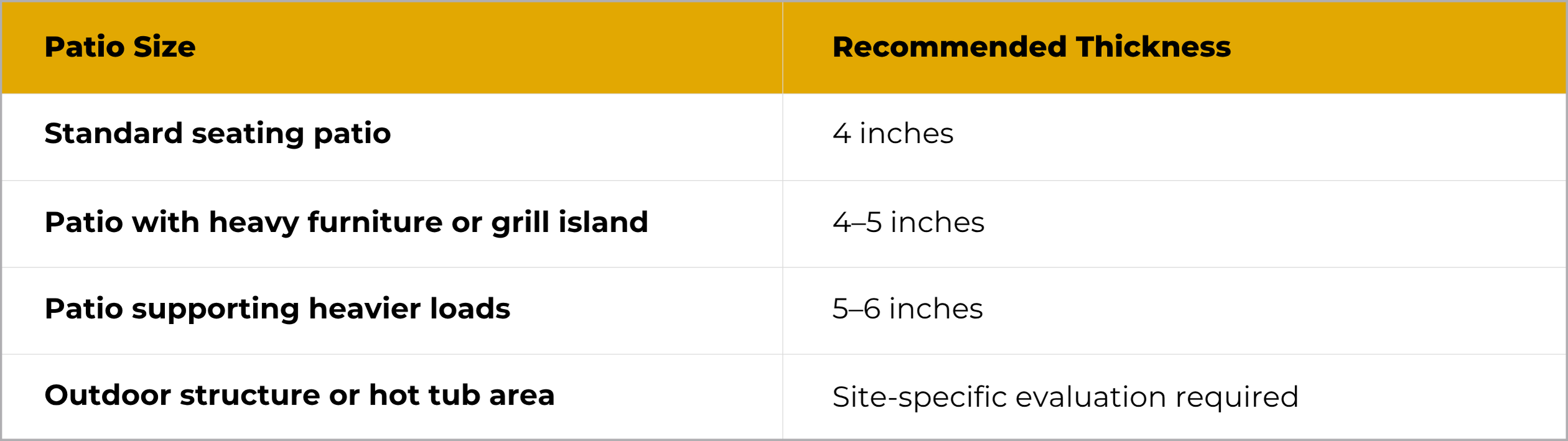
Reinforcement may be recommended depending on soil conditions, patio size, and load expectations. This can include wire mesh, rebar, or fiber reinforcement.
The goal is not to prevent all cracking. Concrete naturally expands, contracts, and cures over time. Reinforcement helps control movement and improve long-term stability.
Finish Options for Concrete Patios
Concrete patios can be finished in several ways. The right option depends on budget, appearance goals, traction needs, and maintenance preferences.
Broom Finish
A broom finish is one of the most common options. It creates a light texture that helps with traction.
Best for:
- Simple patios
- Walkways
- Grill areas
- Budget-conscious projects
Smooth Finish
A smooth finish creates a cleaner surface but may be less slip-resistant when wet. It is usually better for covered patios or areas with less water exposure.
Best for:
- Covered patios
- Modern designs
- Low-traffic spaces
Stamped Concrete
Stamped concrete creates a patterned surface that can mimic stone, brick, slate, or tile.
Best for:
- Decorative patios
- Outdoor living spaces
- High-visibility areas
- Homes with upgraded landscaping
Exposed Aggregate
Exposed aggregate reveals the stone within the concrete surface. It adds texture and visual interest.
Best for:
- Slip resistance
- Decorative texture
- Natural-looking outdoor spaces
Colored Concrete
Colored concrete can be used alone or combined with stamped finishes.
Best for:
- Custom patio designs
- Matching exterior finishes
- Creating warmer or darker tones
Concrete Patio Cost vs Long-Term Value
A patio should not be evaluated by upfront cost alone. Homeowners should consider how the patio will perform over time.
Concrete is often a strong long-term value because it offers:
- Long lifespan
- Low maintenance
- Durable surface
- Design flexibility
- Strong daily usability
A well-built concrete patio can last decades with proper care. Decorative finishes may cost more upfront, but they can improve the look and enjoyment of the outdoor space.
If a homeowner plans to use the patio often, the added cost of a larger size or better finish may be worthwhile.
Common Mistakes Homeowners Make When Budgeting for a Patio
Many patio budget problems come from incomplete planning. Before requesting estimates, homeowners should think beyond the square footage.
Choosing the Cheapest Estimate Without Reviewing Scope
The lowest estimate may not include the same preparation, base work, reinforcement, or finish quality as a higher estimate.
Not Planning for Drainage
A patio that looks good but drains poorly can create long-term problems. Drainage should be discussed before the project begins.
Choosing a Patio That Is Too Small
A patio that fits the budget but not the furniture may feel limited after installation. Homeowners should plan around actual use.
Ignoring Access Challenges
Backyard access can affect labor. Tight gates, slopes, steps, and landscaping can increase project complexity.
Waiting Too Long to Schedule
Spring and summer are busy seasons for concrete work. Planning early gives homeowners more scheduling flexibility.
Concrete Patio Maintenance
Concrete patios are relatively easy to maintain, but they still need basic care.
Recommended maintenance includes:
- Sweep leaves and debris regularly
- Clean stains early
- Rinse dirt and buildup as needed
- Avoid harsh chemicals
- Seal decorative concrete as recommended
- Watch for small cracks and address them early
Decorative patios usually need more sealing than standard concrete. Stamped concrete, colored concrete, and exposed aggregate surfaces rely on sealers to protect appearance.
For homeowners who already have driveway concrete and want long-term care guidance, Sampson’s concrete driveway maintenance guide for Greenville homeowners provides helpful maintenance principles that also apply to many exterior concrete surfaces.
How Long Does a Concrete Patio Last?
A properly installed concrete patio can often last 25 to 40 years. Lifespan depends on installation quality, site preparation, drainage, maintenance, and usage.
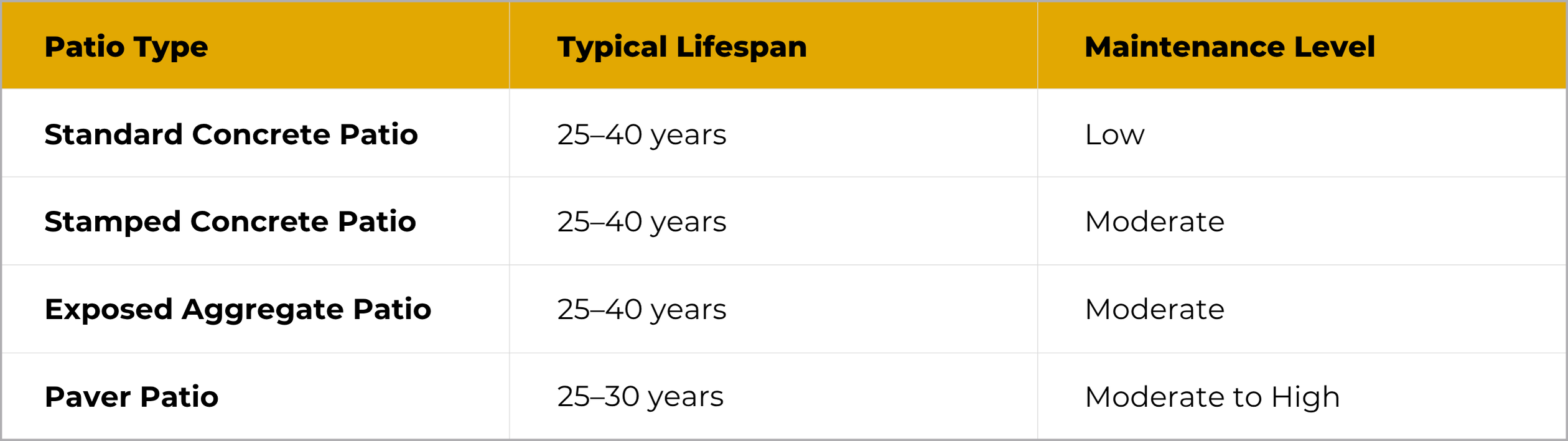
Stamped and decorative patios can last just as long as standard patios, but they require more attention to sealing and surface protection.
Concrete Patio vs Paver Patio Cost
Homeowners often compare concrete patios and paver patios because both can create attractive outdoor spaces.
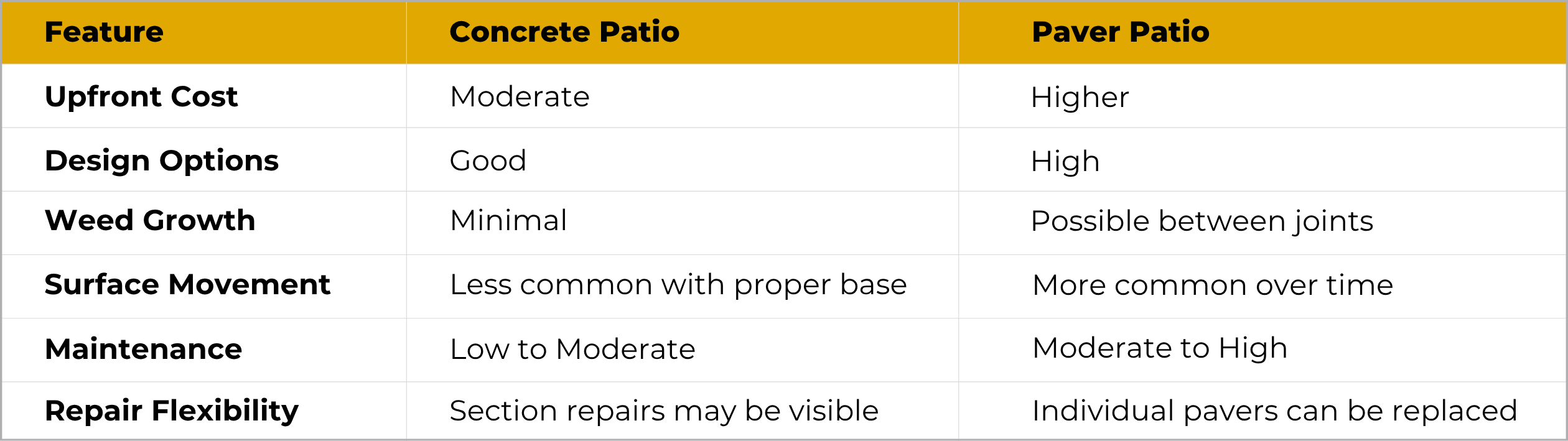
Pavers can be a good option for certain designs, but concrete often provides a cleaner, more continuous surface with fewer joint-related maintenance concerns.
When a Concrete Patio Is Worth the Investment
A concrete patio is often worth the investment when homeowners want a long-term outdoor surface that is durable, low-maintenance, and flexible in design.
It may be a strong choice when:
- The backyard needs a defined seating area
- The existing patio is cracked or uneven
- The home needs better outdoor usability
- The homeowner wants a clean surface for dining or entertaining
- The property would benefit from improved curb appeal or backyard appeal
A concrete patio is not just about appearance. It improves how the outdoor space functions.
Questions to Ask Before Hiring a Concrete Patio Contractor
Before hiring a contractor, homeowners should ask questions that clarify experience, process, and expectations.
Helpful questions include:
- What site preparation is included?
- How will drainage be handled?
- What thickness do you recommend?
- Is reinforcement included?
- What finish options are available?
- How long will the project take?
- When can the patio be used?
- What maintenance do you recommend?
- Is cleanup included?
Clear answers help homeowners compare contractors more accurately.
Why Professional Installation Matters
Concrete patio installation requires more than pouring concrete into forms. The finished result depends on preparation, timing, finishing skill, and curing.
Professional installation helps ensure:
- Proper slope
- Stable base
- Correct thickness
- Clean edges
- Controlled joint placement
- Durable finish
- Better long-term performance
Sampson Concrete Company works with homeowners throughout Greenville and surrounding areas to plan and install concrete patios that fit the property, budget, and intended use.
Final Thoughts
Concrete patio cost in Greenville, SC depends on patio size, finish type, site preparation, drainage, reinforcement, and access. Standard patios are usually more affordable, while stamped, colored, and exposed aggregate patios require a higher investment.
The best patio is not always the cheapest option. A well-planned concrete patio should fit the way the homeowner wants to use the outdoor space while being built for long-term durability.
If you are planning a concrete patio in Greenville or nearby areas, Sampson Concrete Company can evaluate your property, discuss finish options, and provide a clear estimate based on your project goals.